
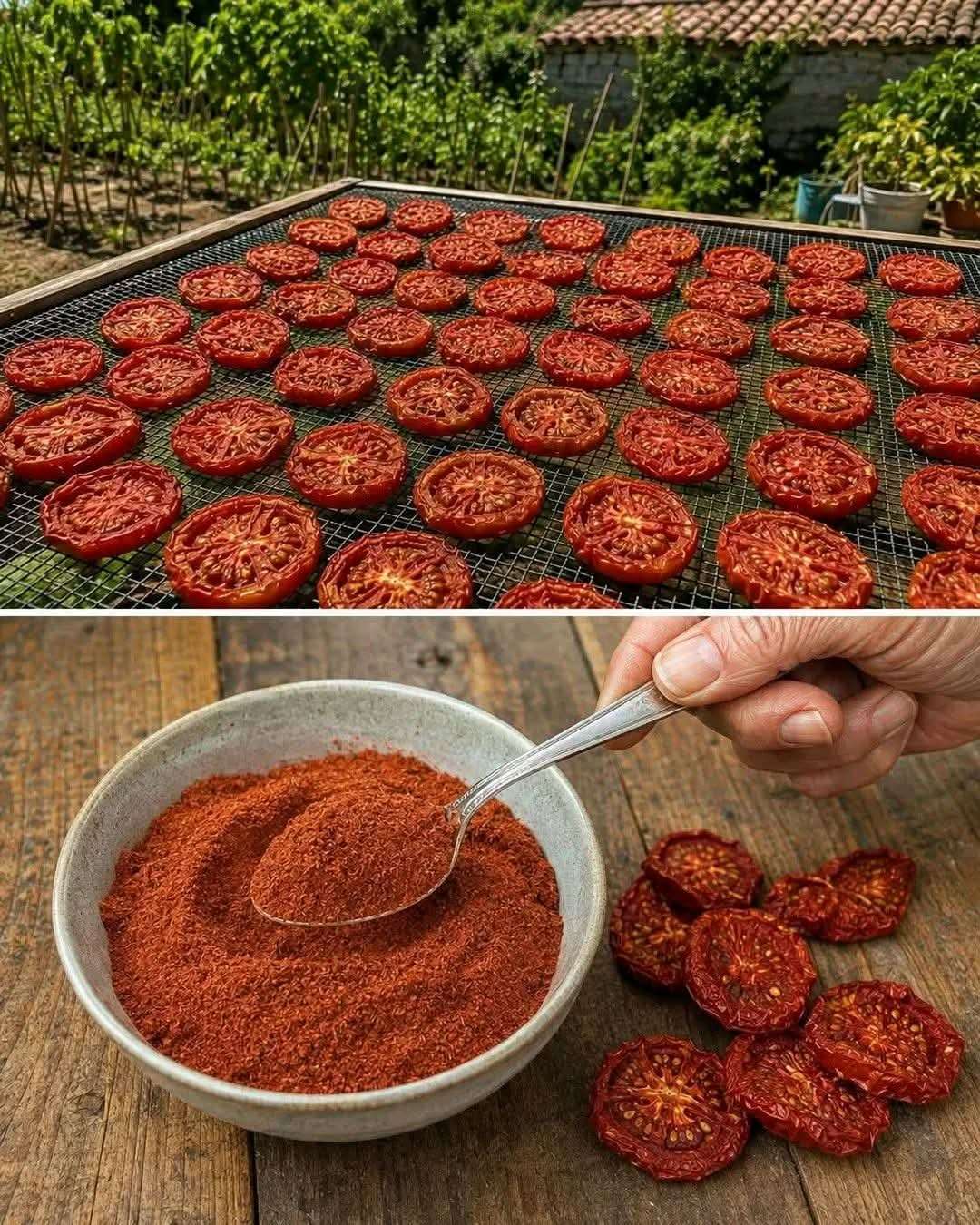
This Homemade Tomato Powder Recipe is one of the best ways to preserve fresh tomatoes and turn them into a flavorful, colorful, and useful kitchen ingredient.
It is made by drying ripe tomatoes until crisp, then grinding them into a fine red powder.
The flavor is deep.
The color is beautiful.
The aroma is rich.
The uses are endless.
Homemade tomato powder can be added to soups, sauces, stews, rice, pasta, marinades, spice blends, roasted vegetables, salad dressings, bread dough, homemade ketchup, pizza sauce, and even dry rubs.
If you grow tomatoes in your garden, this recipe is perfect when you have too many ripe tomatoes at once.
Instead of letting them spoil, you can dry them and create a concentrated tomato seasoning that lasts much longer than fresh tomatoes.
This is also a smart recipe for anyone who loves natural pantry staples, homemade seasonings, food preservation, garden recipes, and zero-waste cooking.
Recipe Overview
Detail Information
Recipe Name Homemade Tomato Powder
Prep Time 15–25 minutes
Drying Time 6–24 hours depending on method
Grinding Time 5 minutes
Total Time Varies by drying method
Yield About ½ to 1 cup powder depending on tomatoes
Course Seasoning, Pantry Staple
Cuisine Homemade Preserving
Difficulty Easy
Best Tomatoes Roma, plum, cherry, garden tomatoes
Best Storage Airtight jar in a cool dry place
Main Ingredient Fresh ripe tomatoes
Flavor Sweet, tangy, rich, concentrated tomato flavor
Why You’ll Love This Homemade Tomato Powder Recipe
You will love this Homemade Tomato Powder Recipe because it turns simple tomatoes into a powerful pantry ingredient.
It is natural.
It is affordable.
It reduces food waste.
It stores easily.
It adds strong tomato flavor.
It is perfect for garden tomatoes.
It can replace tomato paste in some recipes.
It is easy to use in dry spice blends.
Fresh tomatoes are delicious, but they do not last forever. When tomato season arrives, many gardeners end up with baskets of ripe tomatoes.
Some become sauce.
Some become salads.
Some become salsa.
But tomato powder is one of the most useful ways to preserve them because it takes very little space and can be used in so many recipes.
A spoonful of tomato powder can add color, acidity, sweetness, and rich tomato depth to many dishes.
It is like capturing the flavor of summer in a jar.
What Is Tomato Powder?
Tomato powder is made from tomatoes that have been sliced, dried completely, and ground into a powder.
It is similar to dehydrated tomato seasoning.
The drying process removes moisture and concentrates the tomato flavor.
Once ground, the powder becomes a versatile ingredient that can be stored in a jar and used whenever you need tomato flavor.
It can be used dry as a seasoning.
It can also be mixed with water to make tomato paste, tomato sauce, or tomato juice.
The texture depends on how finely you grind it.
A fine powder dissolves easily.
A slightly coarse powder works well in spice mixes and dry rubs.
Why Tomato Powder Is So Useful
Tomato powder is useful because it gives you tomato flavor without needing canned tomatoes or fresh tomatoes.
It is lightweight.
It takes little storage space.
It lasts longer than fresh tomatoes.
It is easy to measure.
It can be added directly to recipes.
It helps thicken sauces.
It gives soups a richer flavor.
It adds color to homemade seasoning blends.
It is perfect for camping, emergency pantry storage, meal prep, and garden preservation.
If you cook often, tomato powder is one of those ingredients that quickly becomes a favorite.
Best Tomatoes for Making Tomato Powder
You can make tomato powder with almost any tomato, but some types work better than others.
Roma Tomatoes
Roma tomatoes are one of the best choices.
They have less water and more flesh.
That means they dry faster and create a thicker powder.
Plum Tomatoes
Plum tomatoes are similar to Roma tomatoes.
They are meaty and flavorful.
They are excellent for drying.
Cherry Tomatoes
Cherry tomatoes are sweet and flavorful.
They dry beautifully and make a naturally sweet tomato powder.
They can be sliced in half before drying.
Beefsteak Tomatoes
Beefsteak tomatoes can be used, but they contain more juice.
They may take longer to dry.
Remove some seeds and excess liquid for best results.
Garden Tomatoes
Any ripe garden tomatoes can work.
If they are very juicy, slice them thinner and dry them longer.
For the best homemade tomato powder, use ripe, flavorful tomatoes that are not spoiled, moldy, or damaged.
Ingredients
Main Ingredient
Ingredient Amount
Fresh ripe tomatoes 4–5 pounds
Optional Seasoning Additions
Ingredient Amount
Sea salt ½ teaspoon optional
Garlic powder ½ teaspoon optional
Onion powder ½ teaspoon optional
Dried basil ½ teaspoon optional
Dried oregano ½ teaspoon optional
Black pepper ¼ teaspoon optional
Chili flakes ¼ teaspoon optional
For pure tomato powder, use only tomatoes.
For a tomato seasoning blend, add herbs and spices after grinding.
Ingredient Notes
Fresh Tomatoes
Fresh tomatoes are the star of this recipe.
Choose tomatoes that are fully ripe and flavorful.
The better the tomatoes taste fresh, the better the tomato powder will taste.
Avoid tomatoes that are moldy, rotten, bruised, or overly soft.
Small blemishes can be cut away, but spoiled tomatoes should not be used.
Salt
Salt is optional.
If you want a pure tomato powder that can be used in many recipes, do not add salt.
This gives you more control later when cooking.
If you want a ready-to-use seasoning, you can add a little salt after grinding.
Herbs
Dried basil, oregano, thyme, rosemary, and parsley all pair well with tomato powder.
Do not add fresh herbs before storage unless they are fully dried.
Moisture can reduce shelf life.
Garlic and Onion Powder
Garlic powder and onion powder can turn tomato powder into a savory all-purpose seasoning.
This is excellent for pasta, pizza, roasted vegetables, and soups.
Equipment Needed
Equipment Purpose
Sharp knife Slicing tomatoes
Cutting board Prep surface
Dehydrator, oven, or sun-drying rack Drying tomatoes
Parchment paper Prevents sticking
Blender, spice grinder, or food processor Grinding dried tomatoes
Fine mesh sieve Optional for smoother powder
Airtight jar Storage
Spoon Measuring and mixing
A dehydrator gives the most reliable result.
The oven works well if you do not have a dehydrator.
Sun-drying can work in hot, dry climates but needs careful protection from dust and insects.
Step-by-Step Instructions
Step 1: Wash the Tomatoes
Wash the tomatoes under cool running water.
Rub them gently with your hands.
Dry them with a clean towel.
Clean tomatoes are important because the skin will be dried and ground into the powder.
Remove stems and any damaged spots.
Do not use spoiled tomatoes.
Step 2: Slice the Tomatoes
Slice the tomatoes into thin, even rounds.
For Roma tomatoes, slice them about ¼ inch thick.
For cherry tomatoes, cut them in half.
For very juicy tomatoes, remove some seeds and watery pulp if desired.
Even slices dry more evenly.
If slices are too thick, they will take much longer to dry.
If slices are too thin, they may stick or become too fragile.
Step 3: Arrange the Tomato Slices
Place the tomato slices in a single layer on dehydrator trays, baking sheets, or drying racks.
Do not overlap them.
Air needs to move around each slice.
If pieces overlap, they may dry unevenly and stay soft in the center.
For oven drying, line the baking sheet with parchment paper.
For dehydrator drying, place slices directly on the trays.
For sun drying, use a clean mesh rack and cover with food-safe netting.
Method 1: Dehydrator Tomato Powder
A dehydrator is the easiest and most consistent method.
Set the dehydrator to 135°F / 57°C.
Place the tomato slices on the trays.
Dry for 8–14 hours, depending on thickness and moisture level.
Check the tomatoes after several hours.
They are ready when they are completely dry, crisp, and brittle.
They should not feel soft, sticky, or moist.
Let them cool before grinding.
If they bend instead of snapping, dry them longer.
Method 2: Oven-Dried Tomato Powder
You can make tomato powder in the oven.
Preheat the oven to the lowest setting, usually 170°F to 200°F / 75°C to 95°C.
Place tomato slices on parchment-lined baking sheets.
Keep them in a single layer.
Bake slowly for 4–8 hours, depending on the oven and tomato thickness.
Flip the slices halfway through if needed.
Leave the oven door slightly cracked open if your oven holds moisture.
The tomatoes are ready when they are dry and crisp.
Let them cool completely before grinding.
Oven drying is faster than sun drying but requires watching carefully near the end.
Method 3: Sun-Dried Tomato Powder
Sun drying is the traditional method shown in many garden-style images.
It works best in hot, dry weather.
Place tomato slices on a clean mesh drying rack.
Set the rack in direct sunlight.
Cover with fine food-safe netting to protect from insects and dust.
Bring the tomatoes indoors at night to avoid moisture.
Dry for 1–3 days, depending on weather, humidity, and slice thickness.
The tomatoes must become fully dry before grinding.
If your climate is humid, sun drying may not be the best method.
Use an oven or dehydrator for safer and more reliable drying.
Step 4: Cool the Dried Tomatoes
After drying, let the tomato slices cool completely.
Do not grind them while warm.
Warm dried tomatoes can create condensation inside the grinder or jar.
Moisture is the enemy of good tomato powder.
The slices should be dry, crisp, and cool before grinding.
Step 5: Grind the Tomatoes
Place the dried tomato slices into a blender, spice grinder, or food processor.
Grind until fine.
Work in small batches if needed.
A spice grinder gives the finest powder.
A blender works well for larger batches.
A food processor may create a slightly coarser powder.
If the dried tomatoes are fully crisp, they should grind easily.
Step 6: Sift the Powder
For a smoother tomato powder, pour it through a fine mesh sieve.
Return larger pieces to the grinder and grind again.
This step is optional, but it gives the powder a nicer texture.
Fine tomato powder dissolves more easily in soups, sauces, and marinades.
Coarse tomato powder is still useful and works well in seasoning blends.
Step 7: Condition the Powder
After grinding, let the powder sit loosely covered for a short time to make sure there is no trapped warmth.
Then place it in a dry airtight jar.
Check the jar after 24 hours.
If you see moisture, clumping, fogging, or stickiness, the tomatoes were not dry enough.
Spread the powder on a tray and dry it again before storing.
Step 8: Store the Tomato Powder
Transfer the finished tomato powder to an airtight jar.
Label it with the date.
Store it in a cool, dark, dry place.
For longer storage, keep it in the refrigerator or freezer.
Always use a dry spoon.
Moisture can cause clumping and spoilage.
How to Know Tomatoes Are Dry Enough
This is one of the most important parts of the recipe.
Tomatoes must be fully dry before grinding.
They should feel brittle.
They should break or snap.
They should not feel soft.
They should not feel sticky.
They should not bend like leather.
If there is any moisture left, the powder may clump or spoil.
When in doubt, dry the tomatoes longer.
It is better to slightly over-dry than to under-dry.
How to Use Homemade Tomato Powder
Homemade tomato powder is extremely versatile.
Make Tomato Paste
Mix:
1 tablespoon tomato powder.
1 tablespoon water.
Stir until thick.
Add more water if needed.
This creates a quick tomato paste substitute.
Make Tomato Sauce
Mix:
¼ cup tomato powder.
¾ cup water.
Stir until smooth.
Simmer with garlic, olive oil, salt, and herbs.
Add to Soup
Add 1–2 tablespoons tomato powder to soups for rich tomato flavor.
It works especially well in vegetable soup, lentil soup, beef stew, chicken soup, and minestrone.
Add to Pasta Sauce
Stir tomato powder into pasta sauce to make it thicker and deeper.
It is great when your sauce tastes too thin or watery.
Add to Rice
Add tomato powder to rice while cooking for a tomato rice flavor.
Use it with garlic, onion, paprika, and broth.
Add to Spice Blends
Mix tomato powder with garlic powder, onion powder, basil, oregano, paprika, and black pepper.
This makes a homemade pizza seasoning or pasta seasoning.
Use in Marinades
Add tomato powder to marinades for chicken, beef, pork, fish, or vegetables.
It gives color and savory depth.
Add to Bread Dough
Tomato powder can be mixed into bread dough for tomato herb bread.
It gives the bread a beautiful color and flavor.
Best Recipes to Use Tomato Powder In
You can use tomato powder in many dishes.
Tomato soup.
Pasta sauce.
Pizza sauce.
Chili.
Beef stew.
Chicken stew.
Vegetable soup.
Rice dishes.
Dry rubs.
Salad dressing.
Roasted potatoes.
Roasted vegetables.
Homemade crackers.
Savory bread.
Hamburger seasoning.
Taco seasoning.
Marinades.
Tomato powder is especially good in recipes where you want tomato flavor without adding extra liquid.
How Much Tomato Powder to Use
Tomato powder is concentrated, so start small.
For soup, use 1–2 tablespoons.
For sauce, use ¼ cup with water.
For marinades, use 1 tablespoon.
For seasoning blends, use 2–4 tablespoons.
For rice, use 1 tablespoon per cup of dry rice.
For dry rubs, use 1–2 tablespoons.
You can always add more, but it is harder to reduce the flavor once added.
Taste as you cook.
How to Rehydrate Tomato Powder
Tomato powder can be rehydrated with water, broth, olive oil, vinegar, or lemon juice.
For a thick paste, use equal parts powder and water.
For a sauce, use more liquid.
For salad dressing, mix tomato powder with olive oil, vinegar, garlic, and herbs.
For soup, add the powder directly into the pot.
For marinades, mix it with oil and spices.
Let the mixture sit for a few minutes so the powder can absorb the liquid.
Homemade Tomato Seasoning Blend
You can turn tomato powder into a ready-to-use seasoning.
Ingredients
Ingredient Amount
Tomato powder ½ cup
Garlic powder 1 tablespoon
Onion powder 1 tablespoon
Dried basil 1 tablespoon
Dried oregano 1 tablespoon
Paprika 1 teaspoon
Black pepper ½ teaspoon
Salt 1 teaspoon optional
Instructions
Mix all ingredients in a bowl.
Store in an airtight jar.
Use on pasta, pizza, roasted vegetables, chicken, rice, soups, and potatoes.
This seasoning blend is rich, savory, and very useful for everyday cooking.
Homemade Tomato Soup from Tomato Powder
Tomato powder can make a quick soup.
Ingredients
Ingredient Amount
Tomato powder ½ cup
Water or broth 3 cups
Olive oil or butter 1 tablespoon
Garlic powder ½ teaspoon
Onion powder ½ teaspoon
Salt To taste
Black pepper To taste
Sugar Pinch optional
Cream ¼ cup optional
Instructions
Add tomato powder and broth to a saucepan.
Whisk until smooth.
Add seasonings and butter or olive oil.
Simmer for 10 minutes.
Add cream if desired.
Taste and adjust.
Serve hot with bread or grilled cheese.
This is a simple pantry soup that tastes rich and homemade.
Homemade Pizza Sauce from Tomato Powder
Ingredients
Ingredient Amount
Tomato powder ¼ cup
Warm water ½ cup
Olive oil 1 tablespoon
Garlic powder ½ teaspoon
Oregano ½ teaspoon
Basil ½ teaspoon
Salt To taste
Sugar Pinch optional
Instructions
Mix tomato powder with warm water.
Stir until smooth.
Add olive oil and seasonings.
Let sit for 10 minutes.
Spread over pizza dough.
This sauce is thick, flavorful, and perfect when you do not have canned tomato sauce.
Pro Tips for the Best Homemade Tomato Powder
Use ripe tomatoes.
Slice evenly.
Remove excess seeds from very juicy tomatoes.
Dry until completely crisp.
Do not rush the drying process.
Cool before grinding.
Use a dry grinder.
Sift for a fine powder.
Store in airtight jars.
Keep away from heat and moisture.
Use a dry spoon every time.
Label the jar with the date.
How to Keep Tomato Powder from Clumping
Tomato powder can clump if it absorbs moisture.
To prevent clumping, dry tomatoes fully.
Let the powder cool before storing.
Use airtight jars.
Store in a dry place.
Add a food-safe desiccant packet if you have one.
Keep away from steam.
Do not scoop with a wet spoon.
If tomato powder clumps but does not smell bad or show mold, you can break it apart and dry it again.
If there is mold, discard it.
How Long Does Tomato Powder Last?
Properly dried and stored tomato powder can last several months.
For best flavor, use it within 6 months.
If stored in the freezer, it can last longer.
Always check before using.
It should smell like concentrated tomato.
It should not smell sour, moldy, or stale.
It should not show moisture or visible mold.
When stored correctly, it is a very practical pantry ingredient.
Storage Tips
Store tomato powder in a glass jar.
Use an airtight lid.
Keep it in a cool cabinet.
Keep it away from sunlight.
Keep it away from stove steam.
Use a dry spoon.
Label with the date.
For long storage, keep it in the refrigerator or freezer.
Small jars are better than one large jar if you use it often.
This reduces how much air and moisture enter each time you open it.
Can You Freeze Tomato Powder?
Yes, tomato powder can be frozen.
Freezing helps preserve flavor and color.
Place it in a freezer-safe jar or bag.
Make sure it is sealed tightly.
When removing from the freezer, let the container come to room temperature before opening.
This helps prevent condensation from getting inside.
Freezing is a great option if you make a large batch.
Common Mistakes to Avoid
Not Drying Tomatoes Enough
This is the biggest mistake.
Tomatoes must be completely dry before grinding.
Slicing Too Thick
Thick slices take too long to dry and may stay moist in the center.
Overlapping the Slices
Overlapping prevents even drying.
Keep tomatoes in a single layer.
Grinding Warm Tomatoes
Warm tomatoes can create moisture.
Cool completely before grinding.
Storing in a Damp Jar
The jar must be clean and fully dry.
Moisture can ruin the powder.
Using Spoiled Tomatoes
Only use fresh, ripe tomatoes.
Do not use moldy or rotten tomatoes.
Troubleshooting Guide
My Tomato Powder Is Sticky
The tomatoes were not dry enough.
Spread the powder on a tray and dry it again.
My Powder Clumped in the Jar
Moisture got inside.
Dry it again if there is no mold.
Store with a tighter lid next time.
My Tomatoes Are Taking Too Long to Dry
They may be sliced too thick.
The tomatoes may be very juicy.
Increase airflow and continue drying.
My Powder Is Not Fine
Grind it again.
Use a spice grinder for a finer texture.
Sift the powder.
My Tomato Powder Tastes Bitter
The tomatoes may have been over-dried at too high a temperature.
Use lower heat next time.
My Powder Lost Its Color
It may have been stored in light or heat.
Store in a dark, cool place.
Delicious Variations
Garlic Tomato Powder
Add garlic powder after grinding.
This is perfect for pasta, pizza, and roasted vegetables.
Italian Tomato Powder
Add dried basil, oregano, thyme, and rosemary.
This makes an excellent Italian seasoning blend.
Spicy Tomato Powder
Add chili flakes, cayenne, or smoked paprika.
This is great for tacos, rice, soups, and marinades.
Smoked Tomato Powder
Use smoked paprika or smoke the tomatoes before drying.
This gives a deep smoky flavor.
Tomato Basil Powder
Mix tomato powder with dried basil.
Use it in pasta sauce, bread, and soups.
Pizza Seasoning Powder
Mix tomato powder with garlic, onion, oregano, basil, salt, and black pepper.
Sprinkle over pizza, garlic bread, or roasted potatoes.
What to Make with Tomato Powder
Tomato powder can be used in many homemade recipes.
Make tomato soup.
Make pizza sauce.
Make pasta sauce.
Make tomato rice.
Make chili richer.
Season roasted potatoes.
Add to taco meat.
Add to burger patties.
Mix into meatloaf.
Add to scrambled eggs.
Sprinkle on popcorn.