
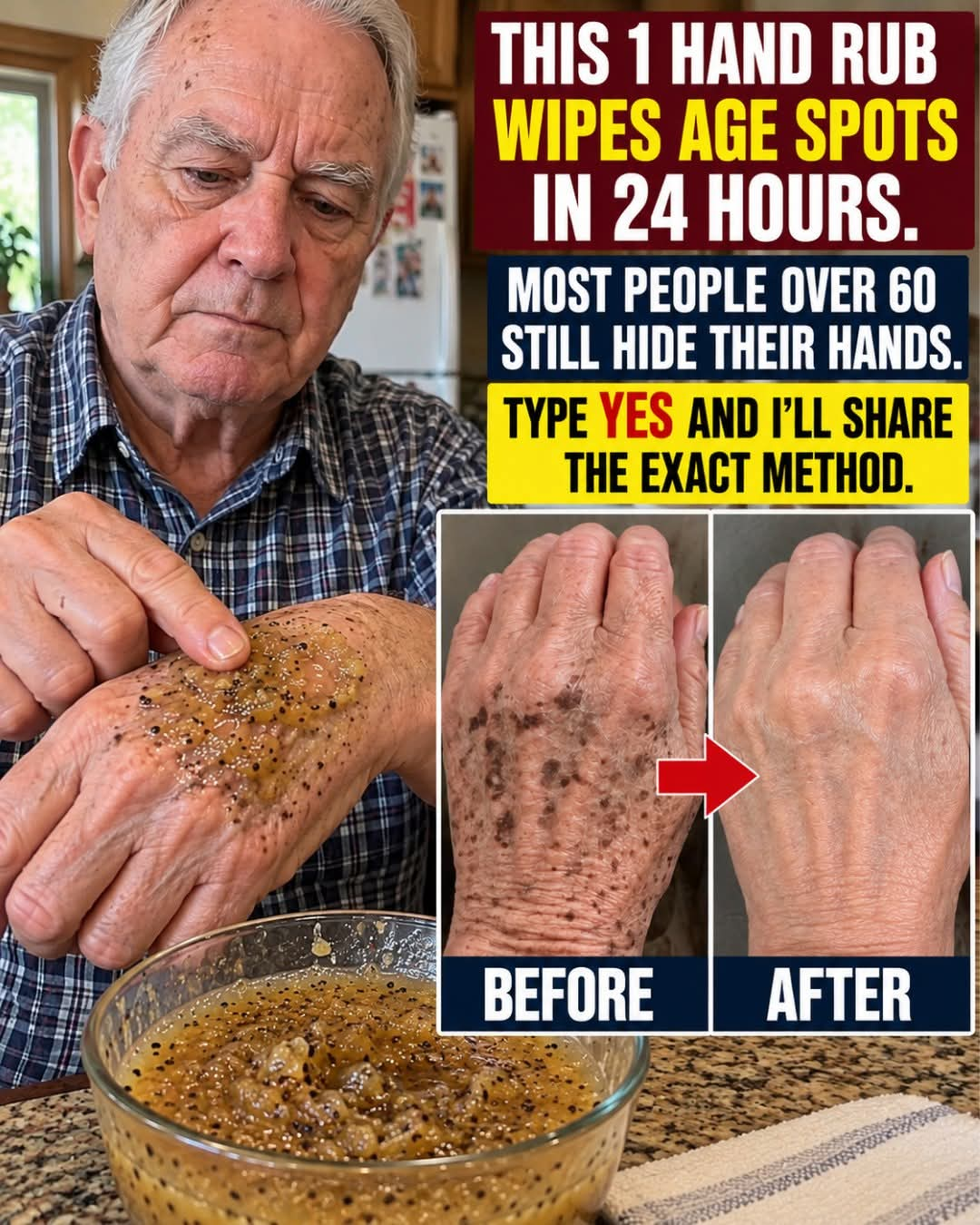
Age spots on the hands can make skin look older, duller, and more uneven than it feels. They often show up after years of sun exposure, and once they appear, they can be frustrating to cover and even harder to ignore. Many people start searching for a fast fix, only to run into harsh claims that sound too good to be true. The good news is that a gentle, skin-friendly routine can support a brighter-looking appearance without aggressive ingredients. And in a moment, you’ll see the simple method that makes this routine work better than most people expect.
Why Age Spots Appear on the Hands
Age spots, also called sun spots or liver spots, are flat areas of darker pigment that often appear on the backs of the hands. They are usually linked to repeated UV exposure over time. That means the hands, which are exposed daily, often show visible changes earlier than other areas.
Sunscreen helps prevent new spots from forming, but existing spots do not usually disappear overnight. That is the part many people miss. The skin on the hands needs both protection and gentle support to look more even.

What This Gentle Hand Rub Is Designed to Do
This routine is not about erasing skin changes in a day. That kind of promise is a red flag. Instead, it focuses on helping the hands look smoother, softer, and more refreshed while supporting the skin barrier.
This is the part that matters most: the goal is appearance improvement, not a medical cure. Research on skin care ingredients shows that moisturizing, mild exfoliation, and daily sun protection can all help improve the look of uneven skin tone over time.
The Simple 3-Ingredient Paste
The base of this hand rub uses three familiar ingredients that are commonly found in gentle skincare routines:

- Finely ground oats for mild physical exfoliation and a soothing feel
- Plain yogurt for its creamy texture and naturally occurring lactic acid
- Aloe vera gel for hydration and a cooling, comforting finish
Each one plays a different role. Oats help lift away surface dullness. Yogurt adds a softening effect. Aloe vera helps the paste glide easily and leaves the skin feeling calm instead of stripped.
How to Make It at Home
Here is the basic method:
- Mix 1 tablespoon finely ground oats, 1 tablespoon plain yogurt, and 1 tablespoon aloe vera gel.
- Stir until a smooth paste forms.
- Apply a thin layer to clean, dry hands, focusing on the backs of the hands.
- Massage gently for about 1 minute.
- Leave it on for 5 to 10 minutes.
- Rinse with lukewarm water and pat dry.
That’s it. No harsh scrubbing. No long waiting. No complicated steps. The simplicity is part of what makes this routine appealing for daily life.

Why the Ingredients Make Sense
There is a reason this combination has become popular in gentle skincare circles. Oats are widely used in sensitive-skin products because they can help reduce the feeling of dryness and roughness. Yogurt contains lactic acid, which is a mild exfoliating acid often used in skincare to improve texture. Aloe vera is known for its soothing, hydrating properties.
Studies on topical lactic acid and oat-based skin care suggest that these ingredients can support smoother-feeling skin when used consistently. But consistency is the key word. Skin changes generally happen gradually, not instantly.
What each ingredient contributes
| Ingredient | Main role | Why it helps the hands look better |
|---|---|---|
| Oats | Gentle exfoliation | Helps remove surface dullness |
| Yogurt | Mild smoothing effect | Supports a softer-looking texture |
| Aloe vera | Hydration and soothing | Helps skin feel calm and comfortable |
What Results to Expect Honestly
Some social posts claim dramatic changes in 24 hours. That is not a realistic expectation for age spots. What people often notice first is softer skin, less roughness, and a fresher-looking surface. Over time, with regular use and daily sun protection, the hands may look more even and cared for.

Here’s the honest truth: if the spots are deep, very dark, or long-standing, they usually need a dermatologist’s evaluation for stronger treatment options. Over-the-counter or homemade routines are best viewed as supportive skincare, not a replacement for medical care.
That distinction protects both your skin and your expectations.
Why Sunscreen Matters More Than Most People Realize
Here’s the part many people skip, and it changes everything. Without sunscreen, the hands keep getting UV exposure, which can worsen discoloration and create new spots. Dermatology groups consistently recommend broad-spectrum sunscreen for exposed skin, including the backs of the hands.
If you use this hand rub but skip sunscreen, the benefits will be limited. If you pair the routine with daily SPF, gloves during long sun exposure, and regular moisturizing, the hands have a much better chance of looking healthier over time.
Best Practices for Safer Use
Even gentle ingredients can irritate sensitive skin if used too often or rubbed too hard. A patch test is smart before applying any new mixture to a larger area.
- Test a small amount on the inner forearm first
- Wait 24 hours to check for redness or itching
- Avoid use on broken, cracked, or irritated skin
- Keep the massage light, not abrasive
- Use 2 to 3 times per week rather than daily
If your skin stings, burns, or becomes red after use, stop the routine. Gentle care should feel comfortable, not harsh.
A Better Step-by-Step Routine for Visible Hand Care
Here is a simple routine that is easy to follow and realistic to maintain:
- Wash hands with a mild cleanser.
- Apply the oat, yogurt, and aloe paste.
- Massage gently for 1 minute.
- Leave on for 5 to 10 minutes.
- Rinse and pat dry.
- Apply a fragrance-free hand cream.
- Finish with broad-spectrum SPF 30 or higher in the morning.
This routine works best when it becomes part of a larger habit. Skin care is rarely about one miracle step. It is usually about repeated small actions that add up.
When to See a Dermatologist
Not every dark spot is an age spot. Some spots can change in shape, color, or size over time and need professional evaluation. If a spot is raised, itchy, bleeding, irregular, or changing quickly, it deserves medical attention.
That is especially important if the spot looks very different from the others on your skin. A dermatologist can tell the difference between harmless pigmentation changes and something that needs treatment.
Quick Takeaway
This gentle hand rub is not a miracle, and it does not promise overnight removal of age spots. What it can do is support smoother, softer, better-looking hands when used consistently with sunscreen and good daily care. The combination of oats, yogurt, and aloe vera is simple, affordable, and easy to fit into a routine.
And now the secret is no longer a secret: the real power is not just in the paste itself, but in how it is paired with sun protection and consistency.
FAQ
Can age spots on hands disappear naturally?
Some spots may fade slightly with time and careful sun protection, but many remain visible without treatment. Supportive skincare can improve the look of the skin, but results vary.
How often should I use this hand paste?
Using it 2 to 3 times per week is a reasonable starting point for most people. More frequent use is not always better, especially for sensitive skin.
What is the most important step for preventing new age spots?
Daily broad-spectrum sunscreen is one of the most important steps. It helps protect the hands from UV exposure, which is a major factor in age spot formation.
Disclaimer: This article is for informational purposes only and is not a substitute for professional medical advice, diagnosis, or treatment.