
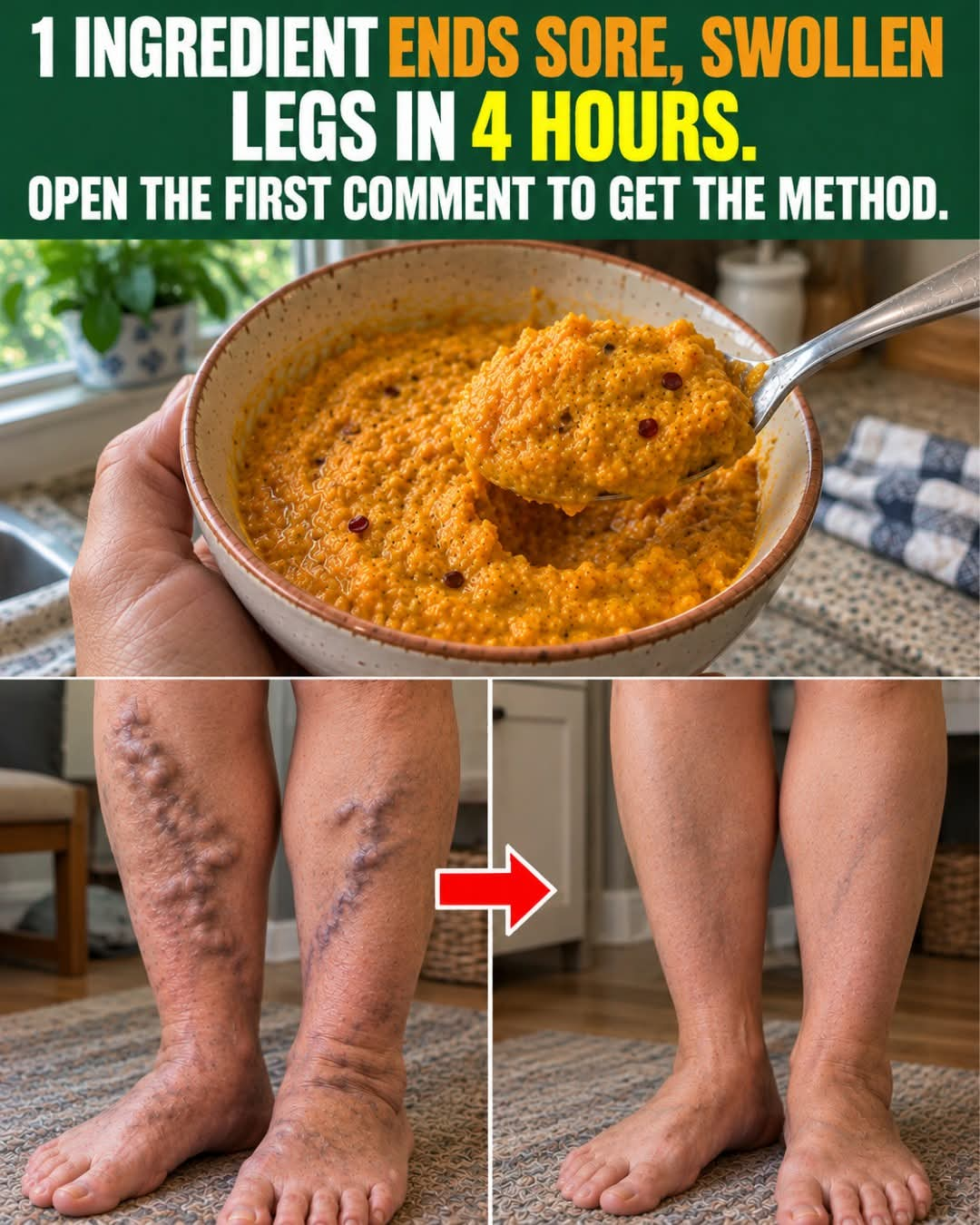
Heavy, swollen legs can turn a normal day into a frustrating one. Shoes feel tighter, standing feels harder, and by evening the discomfort often seems louder than everything else. That kind of leg swelling is especially draining when it keeps coming back and never seems to fully settle. The good news is that simple daily habits can make a real difference, and one surprisingly familiar kitchen ingredient is often part of that conversation. Stay with this, because the most important part is not just what it is, but how to use it safely and realistically.
Why Legs Swell in the First Place
Leg swelling happens when fluid builds up in the tissues, often because circulation is sluggish, veins are under pressure, or the body is reacting to heat, long sitting, long standing, salty meals, or an underlying health issue. In some people, visible veins, aching, and a heavy feeling in the calves or ankles can also point to vein-related strain. Research shows that lifestyle factors can influence how much fluid pools in the lower legs, especially later in the day.
But that is not the whole story. Sometimes swelling is temporary and harmless, and sometimes it is a sign that deserves medical attention. The key is learning the difference between everyday discomfort and warning signs that should never be ignored.

The Simple Blend Behind the Viral Post
Here is the reveal: the ingredient behind this popular one-step routine is turmeric. It has been used in cooking for generations, and modern research has looked closely at its main active compound, curcumin, for its antioxidant and anti-inflammatory properties.
That does not mean it “cures” swollen legs. It means turmeric may fit into a broader routine that supports overall wellness, especially when paired with movement, hydration, and other healthy habits.
What Turmeric Actually Does
Turmeric contains curcumin, a compound studied for how it interacts with inflammatory pathways in the body. Some studies suggest it may support comfort as part of an overall anti-inflammatory eating pattern. That is why many people add it to meals when they want to support recovery, digestion, or general wellness.
Still, the honest version matters: turmeric is not a fast fix for varicose veins, and it cannot reliably erase major leg swelling in four hours. If a post promises dramatic results that quickly, that is more marketing than medicine.
Why people keep coming back to it
Because it is simple, affordable, and easy to use consistently. And consistency matters more than dramatic claims. A small daily habit often works better than chasing a miracle.
Here is the practical advantage:
- Easy to add to everyday food and drinks
- Fits into a balanced meal without special equipment
- May support an overall anti-inflammatory diet
- Can be part of a routine focused on comfort and wellness
How to Use It Safely and Simply
The most common food-based method is straightforward: use ¼ to ½ teaspoon of turmeric powder and stir it into yogurt, soup, oatmeal, or warm water. Many people prefer taking it with a meal, since that is often gentler on the stomach and easier to remember daily.
That is the method in its simplest form. But the timing and context matter just as much as the ingredient itself.
Best timing
Most people use it once daily with food. Some prefer breakfast because it is easier to build a habit, while others add it to dinner as part of a warm meal. The best timing is the one you can repeat consistently.
Step-by-step routine
1. Measure ¼ to ½ teaspoon of turmeric powder.
2. Mix it into a soft food or warm liquid.
3. Take it with a meal.
4. Pair it with water and light movement during the day.
5. Reassess how your legs feel over time, not just after one use.
And this is the part many people miss: if swelling is related to circulation, the ingredient alone will not do the heavy lifting. Movement, leg elevation, and compression stockings may matter just as much, when appropriate and recommended by a clinician.
Why This Method Is Different From the Viral Claim
The viral version makes the routine sound instant and dramatic. Real life is usually slower and more nuanced. Research on vein-related discomfort and leg swelling supports a more practical approach: regular walking, reducing long periods of sitting, elevating the legs, and using properly fitted compression stockings when medically appropriate.
That is why this one-ingredient idea makes sense as a supportive habit, not as a standalone fix. It may help you build a healthier routine, but it should not replace proper care when symptoms are persistent or severe.
How Turmeric Fits Into a Bigger Comfort Plan
The best results usually come from stacking small helpful habits together. Think of turmeric as one piece of a larger strategy, not the whole strategy.
- Walk regularly: Gentle movement helps calf muscles support circulation.
- Elevate your legs: A few minutes above heart level can help reduce pooling.
- Watch sodium intake: Very salty meals can make some people feel puffier.
- Stay hydrated: Water supports normal fluid balance.
- Use compression if advised: Proper fit matters more than guesswork.
Small habits rarely sound dramatic, but they are often the habits that actually hold up in real life.
Common Mistakes People Make
One common mistake is expecting immediate results from a single serving. Another is using too much, too fast, which can upset the stomach in some people. A third mistake is ignoring warning signs because a social post made the issue sound harmless.
Also, not every swollen leg is the same. If swelling is sudden, one-sided, warm, red, or painful, that is not the time to experiment with home routines. Medical evaluation is important.
Avoid these errors
• Using large amounts and assuming more is better
• Taking it on an empty stomach if it bothers you
• Treating a viral tip like a diagnosis
• Delaying care for symptoms that are getting worse
Who This Is Best For
This kind of simple food-based routine is most suitable for people who want to support general wellness, especially if they are already working on healthy movement and eating habits. It may be a reasonable addition for someone with occasional heaviness or mild puffiness tied to long days on their feet.
It is not a substitute for medical care when swelling is severe, new, one-sided, or accompanied by other concerning symptoms. In those cases, the priority is identifying the cause, not testing internet trends.
When to Get Medical Help
Seek urgent medical evaluation if swelling appears suddenly in one leg, or if it comes with warmth, redness, severe calf pain, chest pain, or shortness of breath. Those symptoms can signal a blood clot or another serious issue that needs prompt assessment.
That warning is important because some causes of swelling are far more serious than simple fluid retention. The safest approach is to take new or unusual symptoms seriously.
FAQ
Does turmeric reduce swollen legs fast?
Turmeric may support an anti-inflammatory eating pattern, but it does not reliably reduce significant leg swelling within a few hours. Real improvement usually depends on the cause and on broader habits like movement and elevation.
How much turmeric is commonly used in food?
A common food amount is ¼ to ½ teaspoon of turmeric powder once daily with a meal. If you have any medical conditions or take medications, it is wise to check with a clinician first.
What helps swollen legs besides turmeric?
Regular walking, leg elevation, reducing long periods of sitting, staying hydrated, and using compression stockings when appropriate can all help support comfort and circulation.
Conclusion
Turmeric is a simple kitchen ingredient that can fit into a healthier routine for people dealing with heavy, swollen legs. It is not a miracle fix, and it does not replace proper medical care, but it may be a useful part of a broader plan focused on comfort, circulation, and everyday wellness.
If your symptoms are mild and recurring, start with realistic habits you can repeat: small servings, daily movement, leg elevation, and attention to what makes the swelling worse. If symptoms are sudden or severe, get checked promptly.
Disclaimer: This article is for informational purposes only and is not a substitute for medical advice, diagnosis, or treatment from a qualified healthcare professional.