
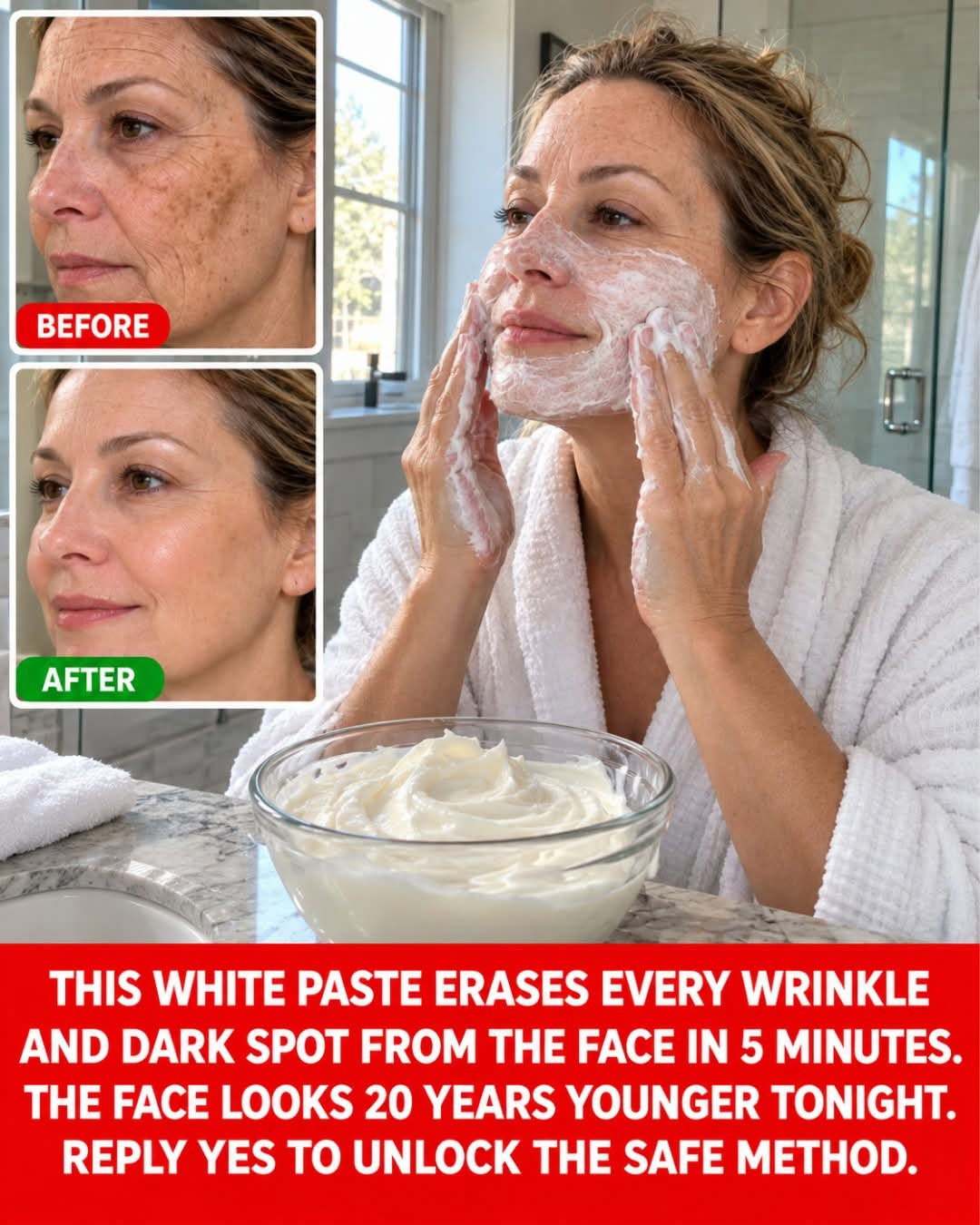
Facial wrinkles can seem to deepen overnight, and dark spots often look more noticeable the moment you step into bright light. That can feel frustrating, especially when you have already tried creams that promised more than they delivered. The skin may still look uneven, tired, and harder to smooth with makeup than you expected. But there is a simple, low-cost method that many people use for a quick visible refresh, and the real reason it works is more interesting than you might think. Keep reading, because the last section reveals the small mistake that makes this paste far less effective.
Why Facial Wrinkles and Dark Spots Stand Out So Much
What you see in the mirror is not just skin color. It is also how light bounces off the surface.
When skin is rough, light hits tiny dips and lines at different angles. That creates shadows, and those shadows make facial wrinkles look deeper than they really are. Dark spots stand out for the same reason: they create contrast against the surrounding skin, so the eye notices them faster.

The good news is that even a small improvement in surface smoothness can change how the face looks in everyday light.
Research on skin texture and photoaging suggests that smoother skin reflects light more evenly, which can make fine lines and uneven tone appear softer. That does not mean the skin has changed overnight. It means the surface looks more uniform, and that visual difference can be surprisingly noticeable.
What This Simple White Paste Actually Is
The paste is very basic: fine rice flour mixed with a small amount of water or plain milk until it becomes smooth and thin. It should look like a light, spreadable paste, not a thick mask.
Rice flour has long been used in simple skincare routines because it can gently polish the skin’s surface when applied and rinsed off carefully. That mild smoothing effect is what helps facial wrinkles look softer and makes dark spots seem less prominent for a while.
But here is the important part: this is a cosmetic effect, not a permanent change. It does not erase wrinkles or remove pigmentation. It simply helps the skin surface look fresher and more even for a few hours.
Why It Can Make Facial Wrinkles Look Softer
Facial wrinkles are often more visible when dead surface cells build up and the skin looks dry or rough. A gentle smoothing paste can reduce that roughness, which helps light reflect more evenly.
That means the tiny shadows inside lines may look less sharp. In everyday terms, the skin can appear more polished, and makeup may sit better afterward.
Here is the interesting part: the effect is strongest when the skin is already reasonably healthy and well hydrated. If the skin is very irritated or dry, the results may be weaker, and the risk of discomfort is higher.
How Dark Spots Can Look Smaller Without Actually Changing
Dark spots are often made more obvious by contrast. When the skin around them looks smoother and more even, the spots do not stand out as much.
This is why some people notice that their complexion looks brighter after using a gentle paste. The spots are still there, but the overall surface looks more balanced.
Studies on skin appearance and light reflection support this idea: even modest improvements in texture can change how pigmentation is perceived. That is one reason simple surface care can make such a visible difference in photos and in natural daylight.
How to Prepare the Paste Safely
Start with a patch test. Apply a small amount to the inner arm or along the jawline and wait 24 hours. If you notice redness, itching, burning, or swelling, do not use it on your face.
To make the paste:
- Use 1 teaspoon of fine rice flour.
- Add a few drops of clean water or plain milk.
- Mix until it becomes smooth and thin.
- Avoid making it too thick or too runny.
Do not add lemon juice, vinegar, baking soda, or essential oils. Those ingredients can increase irritation, especially on facial skin.
Step-by-Step Application for a Gentle Result
Use the paste on clean skin, preferably after washing with a mild cleanser. Leave the face slightly damp so the mixture spreads more evenly.
Follow these steps:
- Apply a thin layer to the cheeks, forehead, and chin.
- Avoid the eyelids, lips, and any broken or irritated skin.
- Leave it on for 8 to 12 minutes.
- Do not let it dry into a hard crust.
- Rinse with lukewarm water using light circular motions.
- Pat the skin dry gently.
- Apply moisturizer right away while the skin is still slightly damp.
The biggest mistake is letting the paste dry too much, because that can make the skin feel tight and irritated instead of smooth.
What You Can Expect Right Away
The effect is temporary, but it can still be useful. Many people notice that facial wrinkles look a little softer and the skin appears more even right after use.
This can be especially helpful before a special event, a photo, or any day when you want your skin to look a little fresher without a complicated routine.
| What May Look Better | What Does Not Change |
|---|---|
| Softer-looking facial wrinkles | The actual depth of wrinkles |
| Dark spots appearing less noticeable | The pigment inside the spots |
| More even-looking skin tone | Long-term texture or collagen changes |
| Short-term smoothness for a few hours | Permanent skin improvement |
The truth is simple: this is a visual refresh, not a structural fix.
Who May Notice the Best Results
People with mildly dry, dull, or uneven-looking skin often notice the biggest short-term difference. If your skin is already fairly smooth and hydrated, the effect may be subtle but still visible.
On the other hand, if your skin is sensitive, easily irritated, or currently inflamed, this may not be the best option. In that case, gentler care is usually the smarter choice.
Research and expert guidance consistently point to the same foundation for healthier-looking skin: protecting the skin barrier, avoiding over-scrubbing, and using sunscreen every day.
How to Make the Effect Last Longer
The paste gives a short-term boost, but your daily routine decides how your skin looks most of the time. That is where the real long game begins.
Try these habits:
- Use broad-spectrum sunscreen with SPF 30 or higher every morning.
- Moisturize daily to support the skin barrier.
- Cleanse with a mild face wash instead of harsh scrubs.
- Drink enough water throughout the day.
- Avoid picking at dark spots or rough patches.
Sun protection matters especially because research on photoaging shows that ultraviolet exposure is one of the biggest reasons skin texture and uneven tone become more noticeable over time.
Actionable Tips You Can Start Today
If you want the best chance of a smooth-looking result, keep the routine simple and consistent.
Try this step-by-step plan:
- Patch test the paste 24 hours before using it on your face.
- Mix only a small amount so it stays fresh and easy to control.
- Apply a thin layer, not a thick mask.
- Rinse before it dries completely.
- Follow immediately with moisturizer.
- Use sunscreen the next morning.
- Limit use to once or twice per week.
If your skin feels stingy, tight, or red afterward, stop using it. Gentle care is always better than forcing a result.
Frequently Asked Questions
Does the white paste remove dark spots permanently?
No. It only makes dark spots look less noticeable for a short time by smoothing the surrounding skin surface. Long-term fading depends more on sunscreen and consistent skin care.
Can I use it every day on facial wrinkles?
No. Using it too often may irritate the skin. Once or twice a week is usually enough for a temporary visual effect.
Is rice flour safe for sensitive facial skin?
Many people tolerate it well when it is mixed thinly and rinsed off promptly, but a patch test is important. If your skin is very sensitive, it may be better to avoid it.
Conclusion
A simple paste made from fine rice flour and water or milk can soften the look of facial wrinkles and make dark spots appear smaller for a few hours. It works by gently smoothing the skin’s surface so light reflects more evenly. That makes the face look fresher, calmer, and more uniform without claiming to permanently change the skin.
Used carefully, it can be a helpful quick-refresh step before an event or on a day when your skin looks a little tired. Just remember that the most important long-term habits are still the basics: gentle cleansing, moisturizing, and daily sunscreen.
The secret is not the paste itself, but using it lightly, rinsing it on time, and never skipping sunscreen afterward.
Disclaimer: This article is for general informational purposes only and is not medical advice. The paste described here provides a temporary cosmetic effect and does not diagnose, treat, cure, or prevent any skin condition. Please consult a qualified dermatologist for persistent wrinkles, dark spots, or any skin concerns, especially if you have sensitive skin or an existing skin condition.