
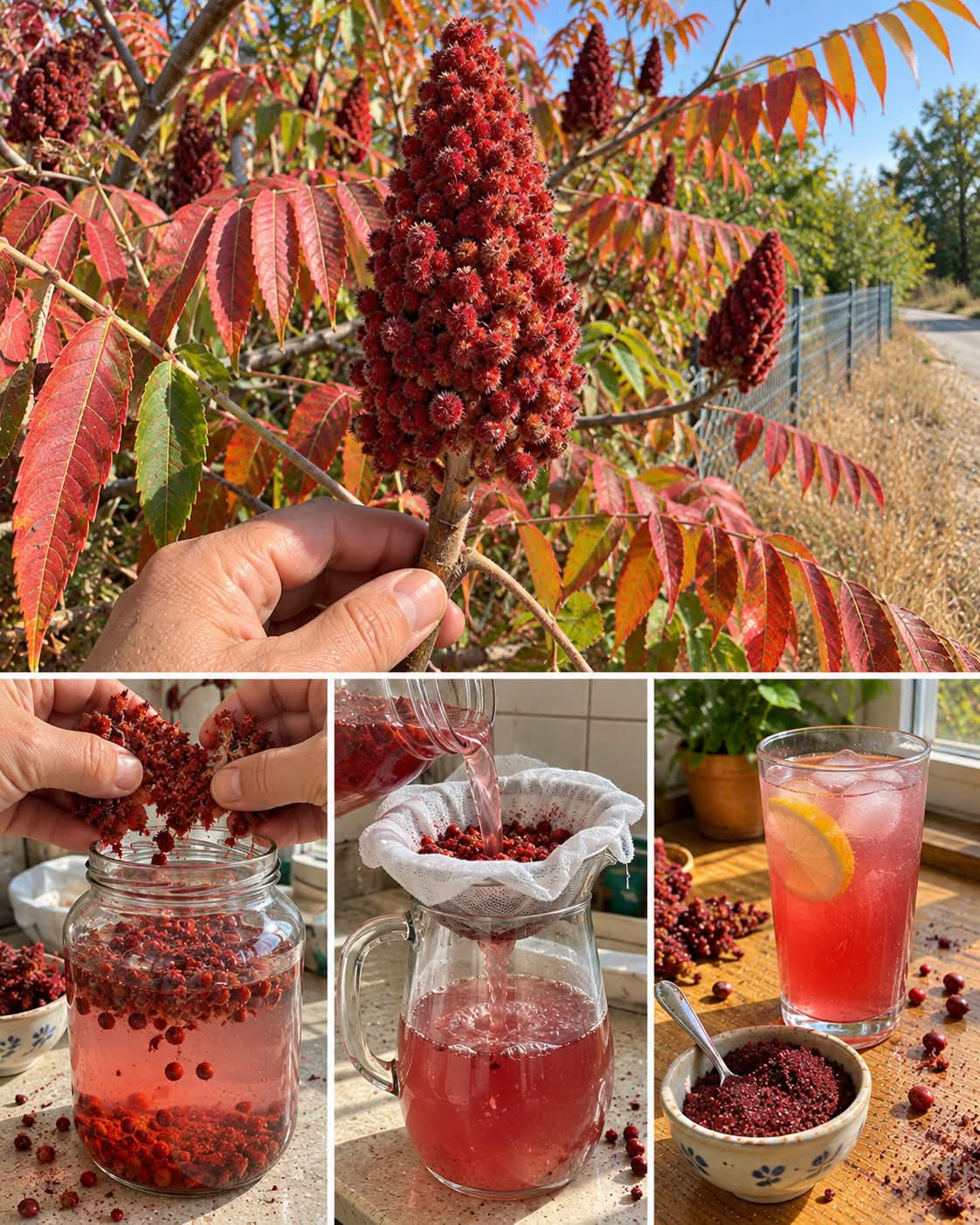
Every autumn the same tree turns the roadsides red. Its leaves flame orange and crimson, and at the tip of each branch stands an upright cone of fuzzy red berries. Most people see it as a decorative shrub, or as a weed growing along a fence. It is actually staghorn sumac, and those fuzzy cones are one of the best free ingredients you can pick.

The berries are covered in tiny hairs that carry a sharp, lemony acid. Soak them in cold water and you get a pink drink that tastes like lemonade with a fruity edge. Dry and grind them and you get a tangy, deep red spice that has been used in Middle Eastern kitchens for centuries. One tree can give you both.
Make sure it is the right plant
The sumac you want has upright, cone-shaped clusters of bright red, fuzzy berries. The branches are covered in soft hair, like the antlers of a young deer, which is where the name staghorn comes from. The leaves are long, made of many narrow serrated leaflets, and they turn red in autumn.
There is a dangerous relative called poison sumac, and you need to know the difference. Poison sumac grows in wet, swampy ground, has smooth branches and produces loose, drooping clusters of whitish or pale gray berries. It can cause a severe skin reaction. Edible sumac always has red, upright, hairy cones. If the berries are white, drooping or growing in a swamp, leave them alone.
Sumac belongs to the same plant family as cashews and mango, so if you have an allergy to either of those, skip it or talk to a doctor first.
Where and when to pick
Pick the cones in late summer through early autumn, when they are fully red, firm and slightly sticky to the touch. Choose a dry day, and ideally pick after a few sunny days without rain. Rain washes away the sour coating on the hairs, and that coating is where all the flavor is.
Choose plants away from busy roads, industrial areas and anywhere that may have been sprayed with herbicides or pesticides. Roadsides collect exhaust and dust, so walk a little further into a quiet spot. Make sure you are allowed to pick there, and take only a few cones from each tree.
What you need
- 4 to 6 ripe sumac cones
- A large glass jar or pitcher
- Cold water
- Fine cheesecloth or a clean cotton cloth
- A sieve
- Honey or sugar, to taste
- Lemon and ice, for serving
- A tray and paper for drying
- A grinder or mortar
- A clean jar for storage
Step 1: Pick the cones
Snap or cut the cones off the branch with a short piece of stem. Look at each one before it goes into your basket. The berries should be bright red and dry, not dull brown, moldy or soaked. Shake the cones gently to dislodge any insects.
Do not wash them. This surprises people, but washing removes the flavor. If they are very dusty, give them a gentle shake or brush with your hand instead.
Step 2: Soak in cold water

Break the cones into smaller pieces and put them in a large jar. Rub them lightly with your hands to loosen the berries and release the red color. Pour cold water over them until they are fully covered. A good ratio is about 1 cone for every 2 cups of water.
Use cold water, never hot. Boiling water pulls out tannins, and the drink turns bitter and brownish. Cold water gives a bright, clean, tangy flavor and a pink color.
Cover the jar and leave it for 2 to 4 hours at room temperature, or overnight in the fridge for a stronger taste. Stir once or twice.
Step 3: Strain carefully
This step matters more than people expect. The tiny hairs on the berries are irritating if they end up in the glass, and they can make your throat scratchy. Line a sieve with a few layers of fine cheesecloth or a clean cotton cloth and pour the liquid through it slowly.
For a very clear drink, strain it a second time through a fresh cloth. The liquid should be light pink to rose red and completely free of fuzz. If you see any floating bits, strain again.

Step 4: Sweeten and serve
Taste the liquid. It is sour, like a lemon that has been softened a bit. Stir in honey or sugar a spoonful at a time until the balance feels right. Most people like about 2 to 4 tablespoons per liter, but it depends on how sour your berries are.
Serve it cold over ice with a slice of lemon, a few mint leaves or a splash of sparkling water. It keeps in the fridge for about 3 to 4 days.

Step 5: Make the spice
For the spice, use the same cones, but skip the soaking. Spread the whole cones or loose berries on a tray lined with paper and leave them in a warm, dry, airy place for a few days, until they are completely dry and brittle. You can also dry them in the oven at the lowest temperature, around 50 to 60°C, with the door slightly open.
Once dry, rub the berries off the stems and grind them in a mortar or a spice grinder. Sift the powder through a fine sieve to remove the larger bits and the hard seeds, which are gritty and unpleasant. What remains is a deep red, lemony, slightly salty powder.
Store it in a clean airtight jar in a cool, dark cupboard. It stays good for a year or more.
How to use the spice
Sprinkle it on salads, grilled meat, roasted vegetables, rice, flatbread, hummus or eggs. It adds a bright sourness without liquid, much like a squeeze of lemon. A pinch mixed with olive oil and thyme makes a classic dip for bread. It is also a key ingredient in many traditional dishes, so you can use it wherever a recipe calls for sumac.
Common mistakes to avoid
Mixing it up with poison sumac. Look for red, upright, hairy cones, never white or drooping berries.
Using hot water. It makes the drink bitter.
Washing the berries. You rinse away the flavor.
Skipping the cloth when straining. The little hairs irritate the throat.
Picking after heavy rain. The berries lose their sourness.
Picking next to a busy road. Choose clean spots away from traffic and sprays.
A tree you have probably walked past a hundred times can give you a drink for a summer afternoon and a spice that lasts all year. The next time the roadside turns red, you will know exactly what to do with it.