
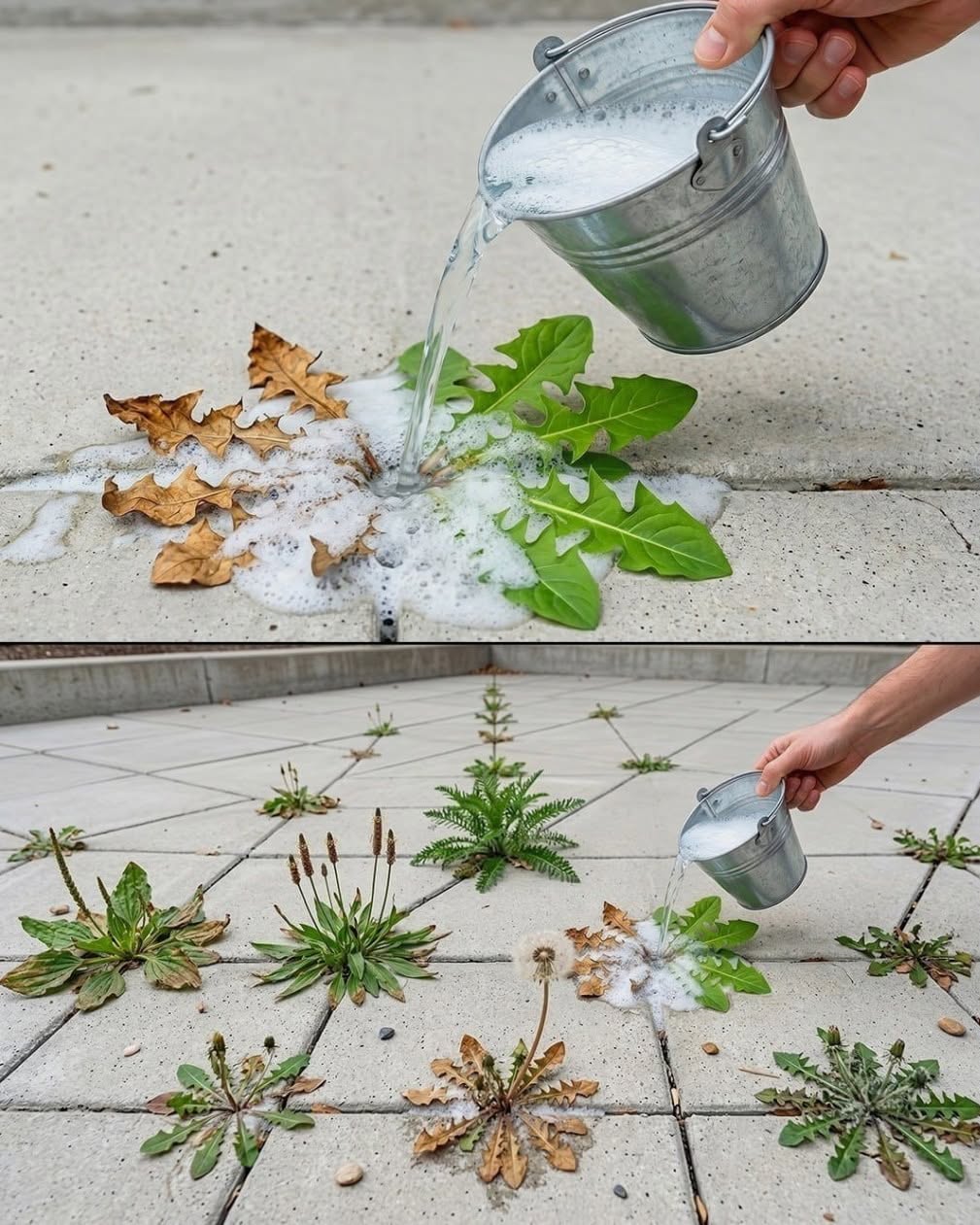
A homemade herbicide can help knock back young weeds in cracks, paths, and bare spots, but it works best when you use it for the right job. Vinegar is a contact herbicide, so it mainly damages the plant tissue it touches rather than reliably killing deep roots. This guide shows you how to make a practical vinegar spray, apply it safely, and avoid common homemade weed-killer mistakes.

1
Choose the right weeds to treat
Use homemade vinegar herbicide on small, actively growing weeds, especially annual weeds in driveway cracks, paths, and bare gravel areas. Vinegar works as a contact weed killer, so it is less reliable on dandelions, bindweed, thistle, and other deep-rooted perennials that can regrow from roots.

2
Mix vinegar with a small amount of liquid soap
Pour 1 gallon of household white vinegar into a clearly labeled garden sprayer, then add 1 tablespoon of plain liquid dish soap or castile soap. The soap helps the vinegar spread over waxy leaves, but the vinegar is doing the main work by drying out the green tissue, as gardening experts note when explaining when vinegar works on weeds.Tip:
Keep this sprayer for weed control only. Do not reuse it for watering, plant feeding, or spraying edible crops.

3
Skip salt and harsh add-ins
Do not add table salt, Epsom salt, bleach, or cleaning chemicals to the sprayer. Salt can damage soil and make future planting harder, and garden experts warn that many viral weed hacks can cause more harm than good to beds and soil health. For planted areas, manual weeding plus mulch is usually the safer long-term choice.Warning:
Never mix vinegar with bleach or other household cleaners. Mixing cleaning chemicals can create dangerous fumes.

4
Pick a dry, calm, sunny day
Apply the spray when weeds are dry, rain is not expected, and the air is calm enough to prevent drift. Warm, bright weather helps the leaves dry out faster, while rain can wash the spray off before it has time to work. Avoid spraying when pollinators are visiting flowers nearby.

5
Protect plants you want to keep
Vinegar is nonselective, meaning it can injure grass, flowers, vegetables, shrubs, and other plants it touches. Shield nearby plants with cardboard or a bucket, then hold the nozzle close to the weed before spraying. If you are working in a garden bed, pull weeds by hand instead and cover cleared soil with organic mulch, a method commonly recommended for natural weed control.

6
Spray the leaves until they are evenly coated
Coat the weed leaves and the center of new growth, but stop before the solution runs heavily into the soil. A light, even coating is enough for young weeds, and careful spot spraying reduces the chance of harming nearby plants. Wear gloves, long sleeves, and eye protection, especially if you are sensitive to vinegar fumes.

7
Check for regrowth after one to two weeks
Look for green shoots returning from the crown or root. If the weed is small and in a non-planted area, you can spot-spray again after about two weeks; if it is a perennial weed, loosen the soil and remove as much root as possible. Repeatedly burning the leaves without addressing the root usually gives only temporary control.

8
Use stronger products only by the label
If household vinegar is not enough, consider whether you need a registered horticultural vinegar product instead of a homemade mix. Stronger acetic-acid herbicides can injure skin and eyes and should be chosen and used according to their label; in the United States, pesticide products are handled through EPA pesticide registration. Do not pour stronger acids into homemade recipes or transfer them into unmarked containers.Warning:
Call poison control or seek urgent help if anyone swallows herbicide, gets concentrated product in the eyes, or has trouble breathing after exposure.

9
Prevent new weeds with mulch and regular pulling
After the sprayed weeds brown, remove dead growth and cover bare soil with 2 to 4 inches of organic mulch where planting is planned. Mulch blocks light from weed seeds and also helps conserve soil moisture, while regular hand-pulling keeps new weeds from setting seed. This combination is usually more effective than relying on homemade spray alone.
Key Takeaways
The bottom line: a vinegar-and-soap spray is most useful for small, young weeds on hard surfaces or bare areas. For garden beds and perennial weeds, pull roots where possible, mulch after clearing, and avoid salt so the soil stays usable.
Frequently Asked Questions
Does homemade vinegar herbicide kill weeds permanently?
Usually not by itself. Vinegar mainly burns the leaves it touches, so young annual weeds may die, but deep-rooted perennial weeds often regrow unless you remove or repeatedly weaken the roots.
Should I add salt to homemade weed killer?
Avoid salt in lawns, garden beds, and anywhere you may want plants later. Salt can build up in soil and make it harder for desirable plants to grow.
Can I use this spray in vegetable gardens?
It is safer to hand-pull weeds and mulch in vegetable beds. Vinegar spray is nonselective, so drift or splashes can injure vegetables, herbs, and flowers.
Is horticultural vinegar better than kitchen vinegar?
Horticultural vinegar is stronger and may work faster, but it can burn skin and eyes and should be treated like a pesticide product. Use only registered products and follow the label exactly.
When is the best time to spray weeds with vinegar?
Choose a warm, dry, calm day when no rain is expected for at least a day. Spray close to the weed so the leaves are coated without drifting onto nearby plants.
What should I do after the weeds turn brown?
Remove dead tops, pull any crowns or roots you can reach, and cover bare soil with mulch. Recheck the area in one to two weeks and spot-treat only new green regrowth.
Sources and References
Sources that support the guidance in this practical guide.
- https://www.bhg.com/gardening/pests/insects-diseases-weeds/vinegar-as-weed-killer
- https://www.thespruce.com/does-vinegar-actually-kill-weeds-11740279
- https://apnews.com/article/c07faf7472e7a2dc40d3886b94f1b508
- https://www.bhg.com/gardening/how-to-garden/how-to-kill-weeds-naturally
- https://www.epa.gov/pesticide-registration