
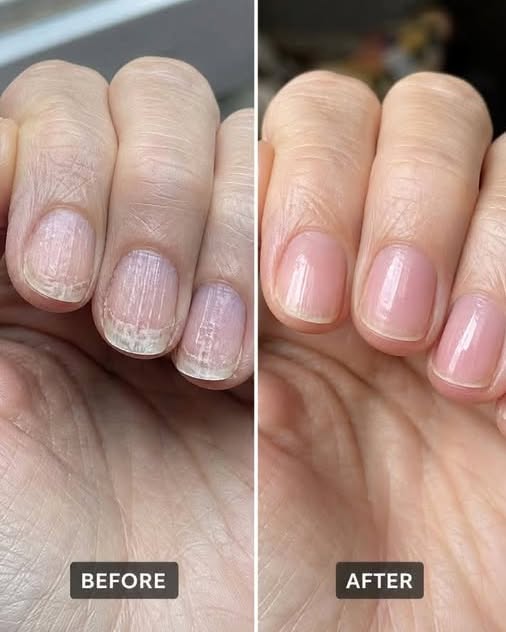
Brittle nails and ridges are common, and a soak can help soften nails before careful trimming and moisturizing. The key is to keep the soak brief and gentle, because too much water exposure can make nails split or peel more easily. This guide shows a conservative nail-soak routine and explains when changes in your nails deserve professional attention.

1
Check your nails before soaking
Look for redness, swelling, pain, lifting, green or dark color changes, deep horizontal grooves, or a new dark streak before you start. The American Academy of Dermatology recommends having several nail changes examined, so skip the soak and seek professional advice if anything looks unusual or painful.

2
Remove polish gently if needed
If you are wearing polish, remove it without scraping or picking at the nail surface. The AAD notes that gel manicures can be tough on nails and recommends polish breaks and rehydrating nails between gel manicures, especially when nails are brittle or peeling: gel manicure nail care.

3
Mix a plain lukewarm soak
Fill a small bowl with lukewarm water, not hot water. Keep the soak plain, or use only a tiny drop of mild cleanser if your nails are dirty, because dermatologists advise protecting nails from too much water exposure when nails split, peel, or break easily.

4
Soak your fingertips briefly
Place only the nail tips in the water for about 5 minutes, then stop once the nails feel slightly softened. A short soak can make trimming and filing easier, while a long soak can leave brittle nails more vulnerable to peeling.

5
Pat your nails completely dry
Blot the nails, cuticles, and skin around each fingertip with a clean towel. Clean, dry nails matter because bacteria and fungi grow more easily in moist spaces, according to AAD nail-care guidance.

6
Seal in moisture right away
Massage a small amount of petroleum jelly or a thick, fragrance-free moisturizer over each nail, cuticle, and fingertip. The AAD says applying an ointment-based moisturizer to hands, nails, and cuticles after washing can help with dryness and brittle nails: skin, hair, and nail care tips.Tip:
For extra dry nails, moisturize before bed and wear thin cotton gloves if that feels comfortable. Stop if your skin becomes irritated.

7
Trim and file conservatively
Use clean clippers to keep fingernails short, then file snags in one direction with a fine emery board. MedlinePlus advises keeping nails short and using an emollient after washing or bathing for brittle nails: nail abnormalities home care.

8
Protect your nails after the soak
Wear gloves for dishwashing, cleaning, and other wet work, and avoid using nails as tools. Frequent wet work and harsh chemicals can contribute to brittle nails, while basic nail-care steps such as keeping nails dry, avoiding cuticle cutting, and filing snags can limit everyday damage.

9
See a doctor for new or worrying changes
Make an appointment with a doctor, dermatologist, or qualified health professional if ridges are new, horizontal, painful, spreading, or paired with color changes, pitting, lifting, swelling, or nail shape changes. Cleveland Clinic explains that nail ridges can be harmless in some cases, but they can also be linked with injury, skin conditions, nutrient issues, or other health concerns: ridges in nails.Important:
This article is for general information only and is not medical advice. Talk to a doctor or qualified health professional about your own situation, especially before making changes to medication, treatment, or care.
Key Takeaways
The bottom line: a nail soak should be simple, brief, and followed by thorough drying and moisturizer. It can support gentle grooming, but new, painful, discolored, or worsening nail changes should be checked by a qualified health professional.
Frequently Asked Questions
Can a nail soak remove ridges?
No. A soak may soften nails for grooming, but ridges often need time to grow out, and some ridges are linked with age, dryness, injury, or health conditions.
How often should I soak brittle nails?
Keep it occasional and brief, such as before trimming or filing. Daily soaking can backfire because frequent water exposure may make nails weaker and more likely to split.
Should I add lemon juice, vinegar, or baking soda?
It is safer to skip acidic or abrasive mixtures unless a qualified professional recommends them for your situation. Plain lukewarm water is enough for softening before careful grooming.
What should I put on nails after soaking?
After drying well, apply a thick, fragrance-free moisturizer or petroleum jelly to the nails, cuticles, and nearby skin to help reduce dryness.
Are vertical ridges always a problem?
Vertical ridges can be common with aging, but new ridges or changes that come with pain, swelling, color changes, lifting, pitting, or horizontal grooves should be checked.
Can gel manicures make brittle nails worse?
Gel manicures can be hard on nails for some people, especially with repeated use or picking. Taking breaks and moisturizing between manicures can help nails recover from cosmetic stress.
Sources and References
Sources that support the guidance in this practical guide.
- https://www.aad.org/public/everyday-care/nail-care-secrets/basics/healthy-nail-tips
- https://www.aad.org/public/everyday-care/nail-care-secrets/basics/pedicures/gel-manicures
- https://www.aad.org/public/everyday-care/nail-care-secrets/basics/nail-changes-dermatologist-should-examine
- https://www.aad.org/news/national-healthy-skin-dermatologists-provide-tips-on-skin-hair-nails
- https://medlineplus.gov/ency/article/003247.htm
- https://my.clevelandclinic.org/health/symptoms/24459-ridges-in-nails