
healthcare professional.
Here is a detailed health article explaining possible causes, early symptoms, treatment options, and warning signs to watch for.
1. Understanding the Different Types of Mouth Bumps and Sores
Changes inside the mouth can look similar even when they have different causes. The location, color, size, duration, and level of discomfort can help a healthcare professional determine what may be happening.
A. Bluish swelling beneath the tongue
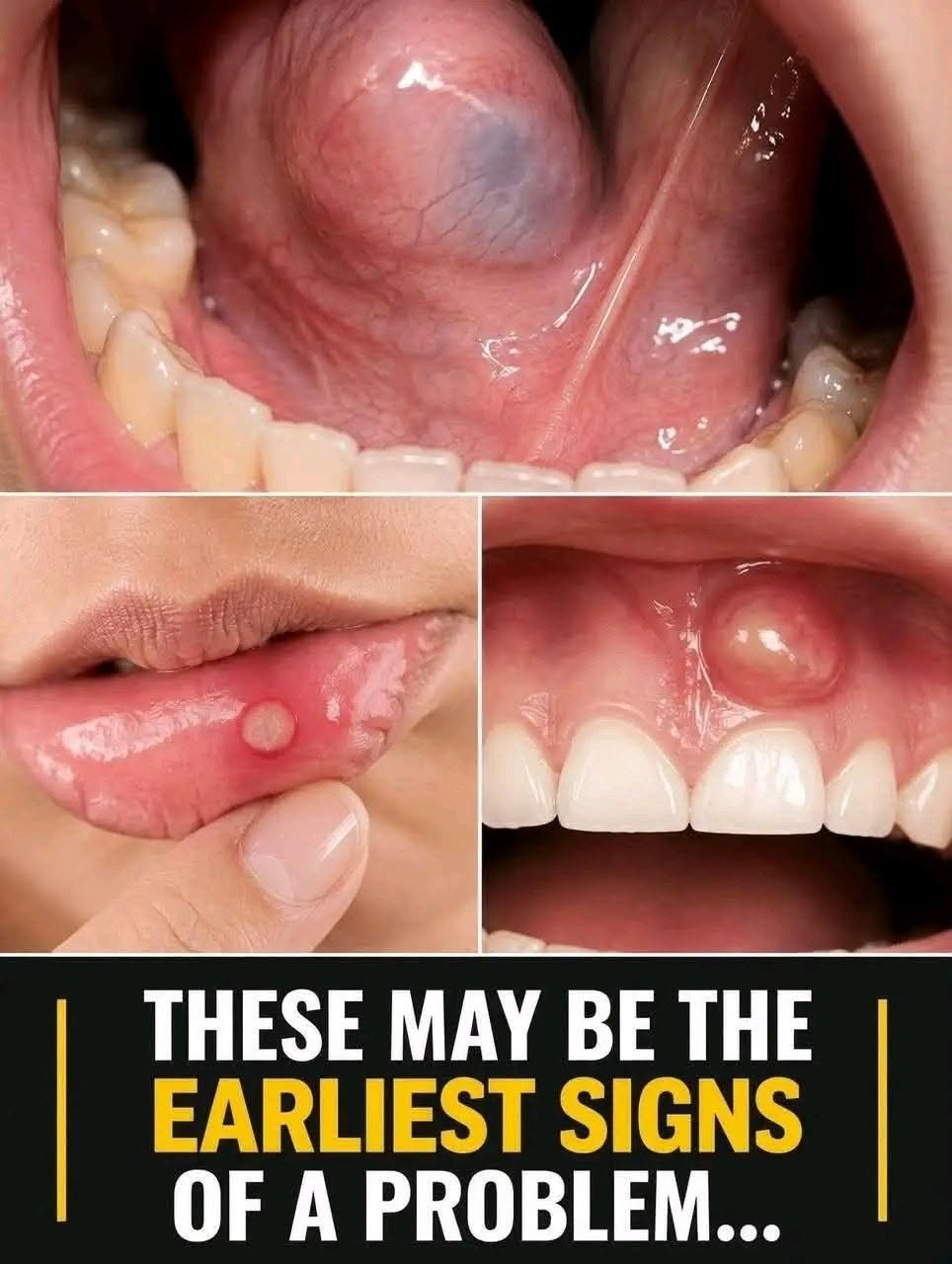
A rounded, bluish or translucent swelling beneath the tongue may be a ranula, a type of mucus-filled cyst associated with a salivary gland. Similar-looking swellings can also have other causes, so a photograph alone cannot establish the diagnosis.
A ranula can develop when saliva collects in the tissues because a salivary gland or its duct has been damaged or blocked. Some swellings cause little discomfort, while larger ones may interfere with eating, speaking, or swallowing.
Possible signs include:
A soft, rounded swelling beneath the tongue.
A bluish or translucent appearance.
A sensation of fullness in the floor of the mouth.
Difficulty speaking or chewing if the swelling becomes large.
What should you do? Arrange a dental or medical examination if you notice a new or persistent swelling beneath your tongue. Do not attempt to puncture, squeeze, or drain it yourself.
B. A round sore on the lip
A small, round sore with a pale center and reddish border may be an aphthous ulcer, commonly called a canker sore. These ulcers often develop on the inner lips, cheeks, or tongue and can make eating, drinking, and brushing uncomfortable.
Common contributing factors include minor injuries, irritation from dental appliances, stress, and certain food sensitivities. Recurrent or unusually severe ulcers may sometimes be associated with nutritional deficiencies or other medical conditions.
Typical symptoms include:
A round or oval sore with a white, yellowish, or gray center.
Redness around the affected area.
Stinging when eating acidic, salty, or spicy foods.
Local tenderness when talking or brushing the teeth.
Most ordinary mouth ulcers heal within one to two weeks without specific treatment.
It is important to distinguish a canker sore from a cold sore. Cold sores are caused by the herpes simplex virus and commonly appear as small blisters on or around the outer lips. Canker sores inside the mouth are not contagious.
C. A raised bump on the gums
A rounded bump on the gums can have several explanations. It might be irritation-related tissue growth, a cyst, or an infection near the root of a tooth. An abscess is particularly important to recognize because dental infections can worsen without appropriate treatment.
Possible warning signs include:
Swelling near a tooth.
Toothache or sensitivity to hot and cold.
Pain when biting or chewing.
A bad taste or discharge of pus.
Redness, tenderness, or swelling around the gums.
Not every gum bump is an abscess, and some dental infections cause little pain initially. A dentist can examine the area and determine whether an X-ray or other testing is needed.
If you suspect a dental abscess, seek urgent dental care rather than waiting for the swelling to disappear. Do not squeeze the bump or take leftover antibiotics.
2. What Causes Mouth Sores and Swellings?
Several factors can contribute to changes in the mouth. Identifying possible triggers can help you decide what to discuss with your dentist.
Minor injuries and irritation
Accidentally biting your cheek or lip, brushing too aggressively, wearing poorly fitting dentures, or having a sharp tooth can injure delicate oral tissues. The resulting sore may improve after the source of irritation is removed.
Use a soft-bristled toothbrush and avoid repeatedly rubbing the affected area.
Salivary gland problems
Salivary glands produce the fluid that keeps the mouth moist and helps with swallowing and digestion. If a salivary gland duct becomes blocked or damaged, fluid can accumulate and form a cyst-like swelling.
Mucoceles commonly affect the inner lower lip, while a similar lesion beneath the tongue is called a ranula. Persistent or enlarging lesions need professional assessment.
Viral infections
Some viral infections cause blisters or sores around the mouth. Cold sores, for example, may begin with tingling, itching, or burning before small blisters appear.
The appearance of a lesion alone is not enough to identify a virus. If sores are frequent, severe, or accompanied by fever, seek advice from a healthcare professional.
Nutritional deficiencies and other medical conditions
Repeated mouth ulcers can sometimes be associated with low levels of iron, vitamin B12, or folate. Certain digestive, inflammatory, or immune-related conditions may also cause recurrent oral symptoms.
This does not mean that every ulcer indicates a nutritional problem. If you experience frequent sores, a healthcare professional can assess your history and decide whether blood tests or further investigation are appropriate.
Tobacco and alcohol exposure
Tobacco use and heavy alcohol consumption increase the risk of several oral health problems, including oral cancer. Avoiding tobacco and limiting alcohol can reduce preventable risks.
Persistent lumps, ulcers, or red or white patches should never be dismissed solely because they are painless.
3. How to Care for a Minor Mouth Ulcer at Home
If you have a small, familiar mouth ulcer and no concerning symptoms, simple measures may help relieve discomfort while it heals.
Rinse gently with salt water
Dissolve half a teaspoon of salt in a glass of warm water, rinse your mouth gently, and spit it out. Do not swallow the mixture.
Maintain gentle oral hygiene
Brush with a soft toothbrush and continue cleaning your teeth carefully. Avoid scrubbing directly over the sore.
Choose foods that do not irritate the sore
Try soft foods and cool drinks. Temporarily avoid very hot, spicy, acidic, salty, or crunchy foods if they cause pain.
Stay hydrated
Drink enough water throughout the day. If drinking is painful, take small, frequent sips of cool water.
These measures can ease symptoms, but they do not treat every cause of a mouth lesion. A pharmacist may recommend an appropriate pain-relieving mouthwash or gel. Ask a healthcare professional before using medicated products if you have underlying health conditions or are treating a child.
Never apply household cleaning products, concentrated essential oils, or other irritating substances directly to a sore. Do not pop blisters or attempt to drain cysts.
4. When Should You See a Dentist or Doctor?
Most ordinary mouth ulcers are temporary. However, some symptoms require a professional examination even if the lesion does not hurt.
Make an appointment if you notice any of the following:
An ulcer that has not healed within three weeks.
A lump or swelling that persists, grows, or repeatedly returns.
A red or white patch that does not disappear.
Unexplained bleeding or increasing pain.
Difficulty chewing, swallowing, or speaking.
Repeated mouth ulcers without an obvious explanation.
A sore that looks different from ulcers you have had previously.
Persistent ulcers, unexplained lumps, and unusual patches can have several causes, including conditions that need early treatment. These symptoms do not automatically mean cancer, but they should be examined rather than ignored.
Seek emergency medical care immediately if swelling in your mouth or under your tongue is rapidly increasing, or if you have difficulty breathing or cannot swallow saliva. These symptoms can indicate a potentially dangerous airway problem.
5. Can Mouth Bumps Be a Sign of Oral Cancer?
One of the reasons persistent mouth changes deserve attention is that oral cancer can sometimes begin with symptoms that resemble ordinary sores or lumps.
Possible warning signs include a non-healing ulcer, an unexplained lump, persistent red or white patches, ongoing mouth pain, difficulty swallowing, or a lump in the neck. Some early lesions are painless.
However, many common mouth problems can produce similar symptoms, and visual inspection alone cannot reliably distinguish them.
If a lesion persists for three weeks, or if you notice a new unexplained lump or patch, arrange an examination with a dentist or doctor. They may examine the mouth and neck and, if necessary, refer you for specialist assessment or a biopsy. Early evaluation helps ensure that serious conditions are not overlooked.
6. How to Help Maintain a Healthy Mouth
Good oral care cannot prevent every mouth sore, but it can help reduce irritation and support overall oral health.
Brush twice daily with fluoride toothpaste.
Clean between your teeth regularly.
Visit your dentist for routine checkups.
Avoid tobacco products.
Limit alcohol consumption.
Eat a balanced diet that includes vegetables, fruits, whole grains, protein sources, and foods containing essential vitamins and minerals.
Address sharp teeth, damaged fillings, and poorly fitting dental appliances.
Keep track of recurring sores and possible triggers.
If you experience repeated ulcers, note when they appear, where they occur, how long they last, and whether they coincide with new medicines, illness, or particular foods. This information may help your healthcare professional identify the cause.
7. Frequently Asked Questions
Are mouth ulcers usually dangerous?
No. Most ordinary mouth ulcers are harmless and heal within one or two weeks. Persistent or unusual lesions should nevertheless be examined.
Can a bump under the tongue disappear on its own?
Some cyst-like swellings may change in size, but a new or persistent swelling should be assessed. A clinician can determine whether observation or treatment is appropriate.
Should I pop a bump on my gums?
No. Popping or squeezing it can injure the tissue and may worsen an infection. Seek dental care, especially if there is pain, pus, or facial swelling.
Does every mouth sore mean cancer?
No. Mouth sores are common and usually have benign causes. However, a sore lasting longer than three weeks, an unexplained lump, or a persistent red or white patch needs professional assessment.
What if a sore keeps returning?
Recurring ulcers may be linked to irritation, certain triggers, nutritional deficiencies, or other conditions. Arrange an appointment if they are frequent, severe, or affecting your ability to eat and drink.
Conclusion
Mouth sores, bluish swellings, and gum bumps can result from several different conditions, ranging from minor irritation to salivary gland cysts and dental infections. Their appearance may offer clues, but it cannot confirm the cause.
The best approach is to maintain gentle oral hygiene, avoid irritating the affected area, and seek professional advice when a lesion is unusual, worsening, or persistent. Remember the important three-week rule for mouth ulcers, and seek emergency care for breathing or swallowing difficulties.
Disclaimer: This article is for general educational purposes and is not a diagnosis. If you have a mouth lesion like one shown in the image, a dentist or doctor can assess it and recommend appropriate care.