
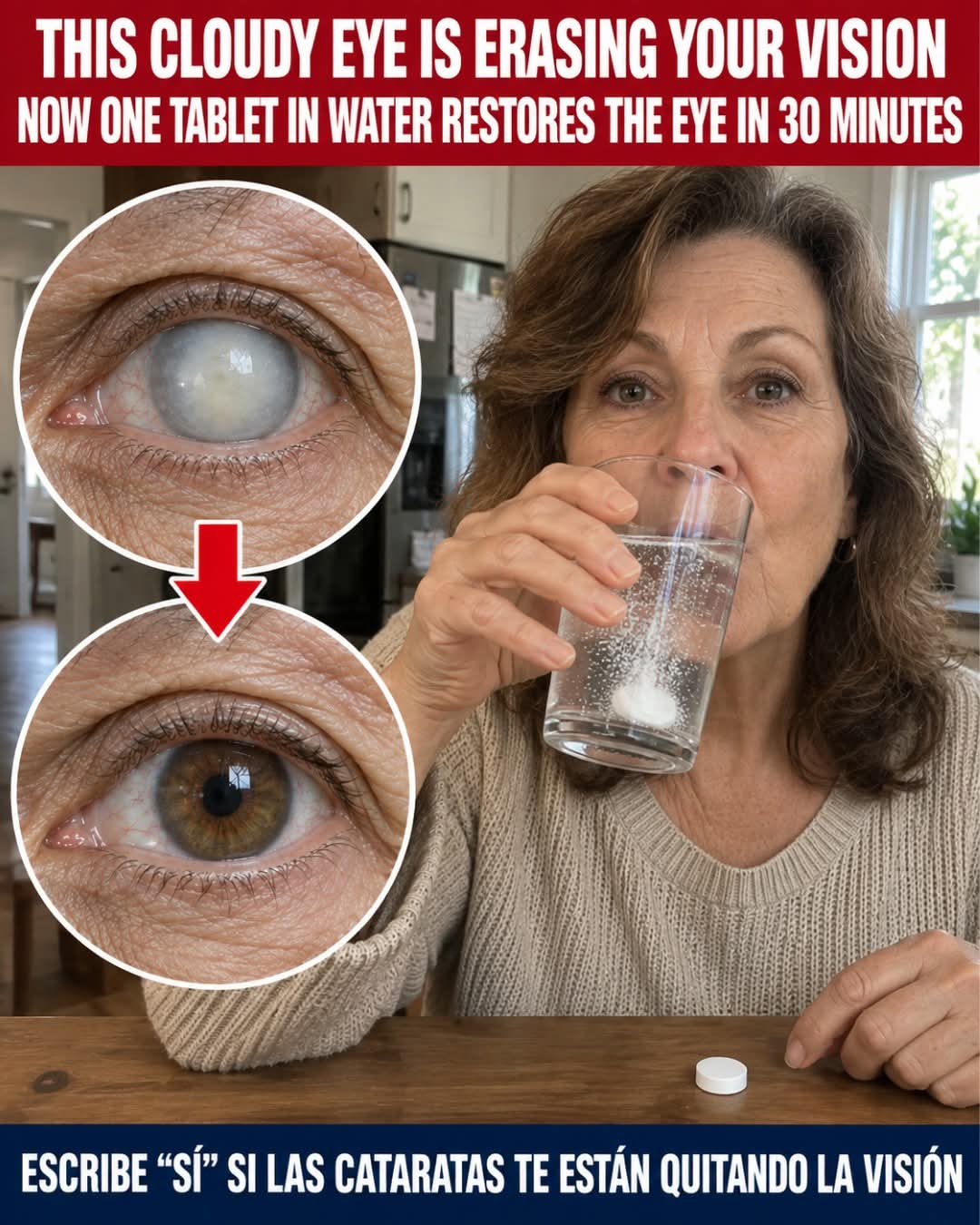
Cloudy vision rarely starts with a dramatic warning. It usually shows up as a soft haze over signs, a blur on your phone, or glare that makes nighttime driving feel stressful. When your eyes already feel tired, that fog can be deeply unsettling and easy to ignore until it becomes part of daily life. The viral “tablet in water” claim sounds like a quick fix, but the real story is more practical, more surprising, and much more useful if you know what to look for. Keep reading, because the most important part is not the fizz.
Why Cloudy Vision Feels So Frustrating
Damaged eyes and cloudy vision affect people so strongly because vision is constant. You use your eyes every minute you are awake, so even a small change can feel huge.
That is why a little haze can become a big emotional burden. Reading gets harder. Screens feel more tiring. Bright lights seem harsher than they should. And suddenly, ordinary tasks require more effort and attention.

The truth is, cloudy vision does not have just one cause. Dry eyes, screen fatigue, uncorrected vision problems, age-related lens changes, blood sugar swings, inflammation, and even dehydration can all contribute to that foggy feeling.
But here is the part many people miss: the “tablet in water” trend is usually pointing to a habit problem, not a magic cure.
What the Tablet-in-Water Claim Is Really Suggesting
Most viral videos show a tablet fizzing in water and imply that drinking it will somehow clean up vision. That is not how the eyes work. A tablet cannot repair damaged tissue overnight, and it cannot replace an eye exam.

What it can do, if the formula is honest, is deliver hydration and a measured dose of nutrients that are already known to support eye health. That is a very different claim from “instant vision repair.”
So the real question is not whether it dissolves. The real question is what is inside it, and whether your daily routine is helping or hurting your eyes in the first place.
Nutrients That Research Keeps Linking to Eye Health
Scientific studies, including research supported by the National Eye Institute, have repeatedly looked at a small group of nutrients that matter for the retina, macula, and tear film. They are not miracle ingredients, but they do have a real role in eye function.

Here are the key ones that show up again and again:
- Lutein and zeaxanthin — carotenoids that concentrate in the macula and help filter high-energy light.
- Vitamin A — needed for normal vision chemistry and a healthy eye surface.
- Vitamin C — an antioxidant that also supports connective tissue.
- Vitamin E — helps protect cell membranes from oxidative stress.
- Zinc — helps move vitamin A and supports retinal function.
- Omega-3 fats — often associated with better tear-film comfort in people with dryness.
Sự thật là, your eyes live in a high-exposure environment. Light and oxygen constantly create oxidative stress, which is one reason nutrition keeps coming up in eye-health research.
Why Whole Foods Usually Beat a Single Dissolvable Tablet
A tablet may give you a standardized dose. But food gives you something more complete: fiber, healthy fats, and other nutrients that help your body absorb and use eye-supportive compounds.

| Option | Strength | Weakness | Best Use |
|---|---|---|---|
| Leafy greens, eggs, orange vegetables, fish | Broad nutrition, lutein, zeaxanthin, healthy fats | Requires planning | Daily foundation |
| Water-based drink with food-derived add-ins | Hydration and convenience | Dose may be unclear | Busy days, screen-heavy afternoons |
| Dissolvable tablet | Simple and portable | Easy to overtrust the fizz | Only if the label is transparent |
But that is not the whole story. The best eye-support routine is not built around one product. It is built around repeated, boring, effective habits that quietly help your eyes every day.
How Hydration Can Change the Way Your Eyes Feel
Mild dehydration often shows up in the tear film first. Tears are not just water. They are a protective layer that keeps the eye surface smooth so light can focus properly.
When that layer becomes unstable, vision can fluctuate. You may notice that things look clearer after blinking, then blurry again a moment later. That can feel like your sight is “failing,” when in reality your eyes may simply be dry and overworked.
Research on dry-eye comfort often points to the same simple supports: adequate fluids, regular blinking, humidity, and omega-3 intake. A glass of water will not fix cataracts or other structural eye disease, but it may help a tired, dry eye feel less foggy.
This is why the viral drink can seem so convincing: people drink water, pause their screen time, blink more, and feel a temporary improvement.
How to Build an Eye-Supportive Drink Step by Step
If you choose to use a dissolvable tablet, treat it as a support habit, not a treatment. Here is a simple way to do it more safely and more usefully.
- Start with a full glass of water. Room temperature is fine. The goal is hydration, not gimmicks.
- Read the label carefully. Look for clear amounts of lutein, zeaxanthin, vitamin C, vitamin E, zinc, or omega-3s.
- Avoid mystery blends. If the label hides the amounts, the product is harder to trust.
- Let it dissolve completely. This helps with consistency and taste.
- Drink it with a meal that includes some fat. Eggs, yogurt, nuts, or avocado can help the body absorb fat-soluble nutrients.
Here is a simple habit that pairs well with it: use the 20-20-20 rule. Every 20 minutes, look at something 20 feet away for 20 seconds. This small break can reduce eye strain and dryness faster than people expect.
Foods That Pair Well With Eye Health Habits
If you want the biggest payoff, focus on your plate. The right foods help more than a single fizzing tablet ever could.
- Spinach or kale for lutein and zeaxanthin
- Eggs for carotenoids plus healthy fat
- Carrots and sweet potatoes for vitamin A precursors
- Berries and citrus for vitamin C
- Almonds and sunflower seeds for vitamin E
- Salmon, sardines, or trout for omega-3 fats
- Beans, lentils, or lean meat for zinc support
Here is the practical part: you do not need a perfect diet. You need a repeatable one. A spinach omelet with fruit on the side does more for eye support than a flashy drink with an unclear label.
Common Mistakes That Make Eye-Support Products Less Helpful
People often spend money on products that look impressive but do very little. That happens because marketing is louder than biology.
Watch out for these mistakes:
- Choosing flavor and fizz over a transparent ingredient list
- Expecting one drink to replace an eye exam
- Taking fat-soluble nutrients on an empty stomach
- Ignoring sleep, smoke exposure, and long screen sessions
- Using homemade mixtures in the eyes or as contact-lens solution
- Waiting too long when cloudiness is sudden, one-sided, or painful
Now look at this carefully: the biggest mistake is delay. Nutrition can support comfort and long-term function, but it cannot diagnose glaucoma, cataracts, macular disease, or a retinal tear. Those need professional evaluation.
Actionable Tips You Can Start Today
If your eyes have been feeling tired or cloudy, start with a simple routine you can actually maintain.
Step 1: Drink a full glass of water when you begin your workday or screen session.
Step 2: Add one eye-supportive food to your next meal, such as spinach, eggs, salmon, or carrots.
Step 3: Use the 20-20-20 rule during screen time to reduce strain.
Step 4: Check whether your room is too dry, too bright, or filled with smoke or dust.
Step 5: Book an eye exam if cloudy vision is new, worsening, or happening often.
The goal is not perfection. The goal is to make your eyes work in a less stressful environment every day.
The Real Meaning Behind the Tablet Trend
Here is the surprising truth: the viral tablet is less important than the routine around it. The drink usually creates a pause, adds hydration, and reminds people to think about their eyes.
That pause may be why some people feel better. Not because the fizz is magical, but because they are blinking more, drinking water, and taking a break from near work.
So the trend is pointing to something real, just not in the way the video claims. Eyes often need a better daily environment, not a miracle product.
If you want the best chance of clearer, more comfortable vision, combine hydration, food, screen breaks, and proper medical care when needed. That is the practical path forward.
FAQ
Does a tablet dissolved in water clear cloudy vision?
No single tablet clears cloudy vision. A well-formulated drink may support hydration and nutrient intake, but persistent haze should be checked by an eye-care professional.
Which nutrients are most often linked to eye health?
Lutein, zeaxanthin, vitamins A, C, and E, zinc, and omega-3 fats are commonly studied for their roles in macular support, antioxidant defense, and tear-film comfort.
Is a homemade drink better than a supplement tablet?
For most people, a food-first approach is stronger. A transparent supplement can be a convenience tool, but it should not replace meals, hydration, or medical evaluation.
Disclaimer: This article is for general educational purposes only and is not a substitute for professional medical advice, diagnosis, or treatment. If you have sudden, painful, or worsening vision changes, seek prompt care from a qualified eye-care professional.