
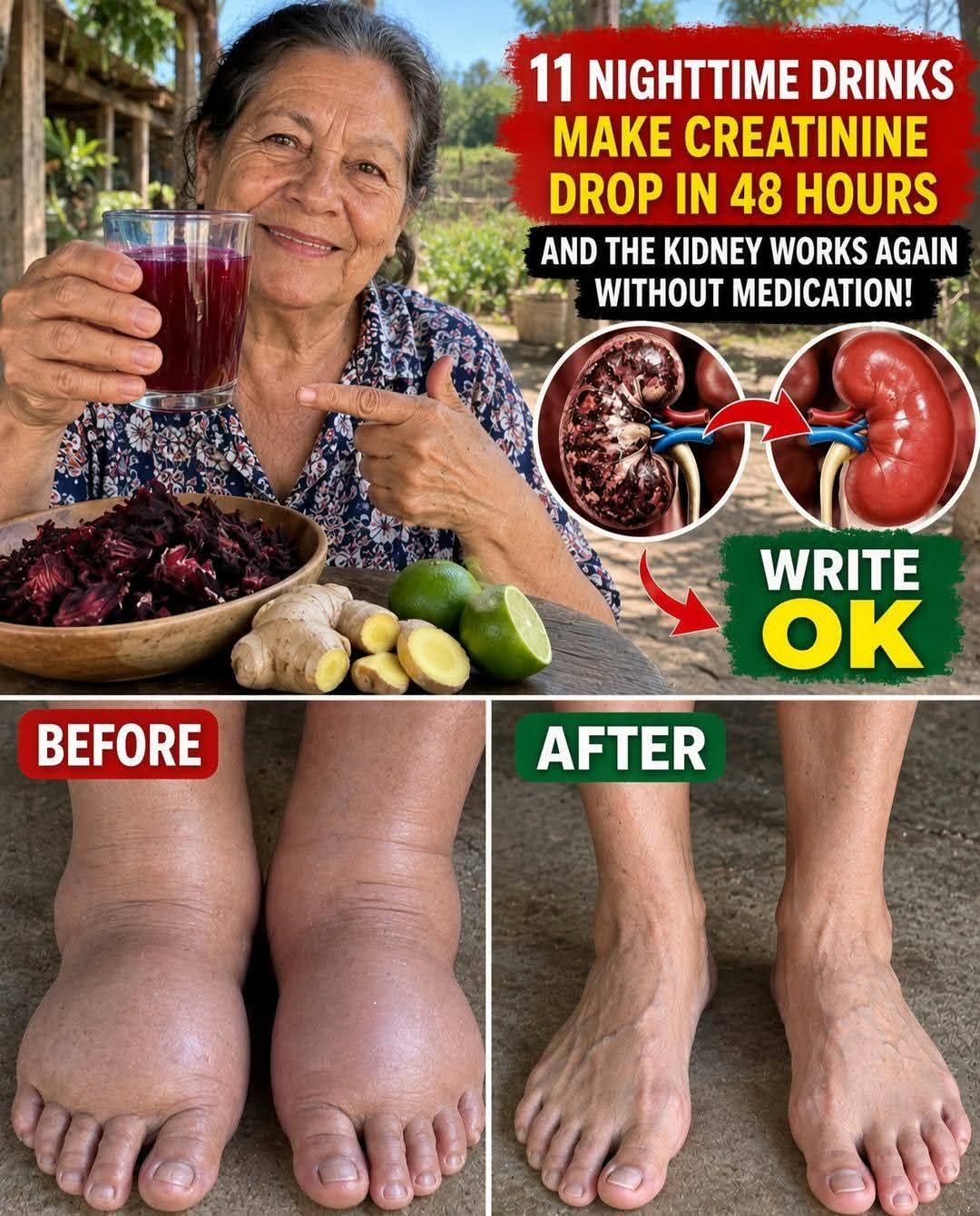
When creatinine levels are higher than normal, many people immediately look for a natural drink that can help support kidney function. Hydration is certainly important for overall health, but there is no drink that can reliably “restart” damaged kidneys or guarantee that creatinine will fall within 48 hours. The right approach is to focus on kidney health, adequate hydration, a balanced diet, and appropriate medical follow-up.
For people who have not been told to restrict fluids, plain water is usually the simplest nighttime option. Instead of drinking an excessive amount at once, sip a reasonable glass of water and maintain regular hydration throughout the day. Drinking too much water in a short period is not a treatment for chronic kidney disease and can be dangerous for some people.
Lemon water is another simple choice. Add the juice of a small amount of fresh lemon to a glass of water and drink it without added sugar. It can make water more enjoyable and may help people maintain their normal fluid intake. Lemon water should be considered a refreshing beverage, not a cure for kidney disease or elevated creatinine.
Cucumber water can be prepared by adding several thin cucumber slices to a glass or bottle of water. Allow the cucumber to infuse for several minutes before drinking. This is another low-calorie way to add flavor to water without relying on sugary beverages.
Mint water is equally simple. Wash several fresh mint leaves, gently crush them, and place them in water for several minutes. The result is a refreshing drink that can be consumed as part of a normal hydration routine.
Ginger water can be prepared by placing two or three thin slices of fresh ginger into a cup of hot water and allowing it to steep for approximately five minutes. After cooling slightly, it can be enjoyed warm. Ginger water may be a pleasant alternative to sweetened beverages, but it should not replace prescribed treatment for kidney problems.
Unsweetened herbal tea can also be an option for some people. Prepare the tea according to the package directions and avoid adding large amounts of sugar. However, people with kidney disease should be careful with concentrated herbal products because “natural” does not automatically mean safe for everyone, particularly when prescription medications are involved.
A small amount of unsweetened cranberry juice diluted with water can provide another flavorful option. Mix approximately half a cup of unsweetened cranberry juice with half a cup of water. Avoid turning the drink into a sugary beverage by choosing an unsweetened product.
Diluted unsweetened apple juice is another possibility. Combine half a cup of unsweetened juice with half a cup of water and drink it in moderation. People managing diabetes, blood sugar, or kidney disease may need individualized dietary advice before regularly consuming fruit juice.
Lime water can be made by squeezing a small amount of fresh lime into a glass of water. It provides flavor without requiring added sugar. For people who are trying to improve their overall hydration habits, simple flavored water can sometimes make it easier to drink fluids consistently.
Hibiscus tea is another popular beverage. Prepare it using hot water according to the product instructions and avoid excessive sugar. Anyone taking medication for blood pressure, kidney disease, or other chronic conditions should discuss regular use of herbal beverages with a healthcare professional because herbs can interact with medications.
Finally, ginger-lime water can combine two simple ingredients. Steep a couple of thin ginger slices in hot water for about five minutes, allow the drink to cool slightly, and add a small squeeze of lime. It can be enjoyed as a warm evening beverage without turning it into a high-sugar drink.
The most important point is that these beverages should not be confused with treatment for chronic kidney disease, acute kidney injury, kidney failure, or significantly elevated creatinine. Creatinine is a waste product measured through a creatinine blood test and is commonly considered together with eGFR when evaluating kidney function. A single abnormal result does not necessarily reveal the complete reason for the change.
Creatinine can be affected by hydration status, muscle mass, recent strenuous exercise, diet, medications, and kidney function. If creatinine is elevated, the appropriate next step is to determine why it is elevated rather than trying to force the number down with homemade drinks.
People with chronic kidney disease should also pay attention to blood pressure, blood sugar, sodium intake, medication use, and regular kidney function testing. High blood pressure and diabetes are important risk factors for kidney damage, so controlling these conditions can be an important part of protecting kidney health.
Anyone who has been diagnosed with kidney disease should also ask their healthcare professional how much fluid they should consume. While dehydration can contribute to kidney problems, some people with advanced kidney disease or kidney failure are specifically instructed to limit fluids. In that situation, drinking eleven beverages at night would be inappropriate.
If you are experiencing very little or no urine, severe swelling, difficulty breathing, persistent vomiting, confusion, chest pain, or a rapidly worsening condition, seek urgent medical attention rather than relying on a homemade drink.
Good kidney health is built on consistent habits rather than a single miracle recipe. Choose sensible hydration, maintain a kidney-friendly diet appropriate for your individual condition, follow your prescribed treatment, monitor important laboratory values such as creatinine and eGFR when advised, and speak with a qualified healthcare professional when kidney function tests are abnormal. No nighttime drink can guarantee that kidney function will return to normal in 48 hours, but sensible hydration and proper medical care can be important parts of a long-term kidney health plan.