
Disclaimer: The information provided in this article is for educational and informational purposes only. It is not intended as medical advice, nor does it replace professional medical expertise or treatment. We do not take responsibility for any adverse effects from foraging or consuming wild plants. Always consult a qualified healthcare professional or a certified foraging expert before consuming any wild plant, especially if you are pregnant, nursing, taking medication, or have a pre-existing medical condition.
If you have ever traveled down a highway or walked along the edge of a forest in late summer, you have likely seen Staghorn Sumac. Known scientifically as Rhus typhina, this wild plant is very easy to spot. It grows in large shrubs or small trees and produces bright red, fuzzy, cone-shaped clusters of berries that point straight up toward the sky. The branches of the plant are covered in a soft, velvety fuzz, which looks exactly like the antlers of a male deer in the velvet stage. This specific physical feature is how the plant received its common name.
For many people, sumac is simply a roadside weed that they ignore. But for foragers, herbalists, and chefs, it is an incredibly valuable wild food source. The fuzzy red berries contain a powerful, tart, lemon-like flavor. This flavor can be extracted and used in cold drinks, dry kitchen spices, and natural homemade remedies.
This article will guide you through the primary health benefits of Staghorn Sumac. It will detail how it was used traditionally to ensure safety, how to identify and forage it correctly, and how to process the harvest in your own kitchen using simple methods.×
Ad-free reading
Sick of ads?
Read every guide with nothing in the way. No banners, no video, no pop-ups. Just the article.Go ad-free
From $2.99 a month · Cancel anytime
Traditional Uses for Extra Safety
When dealing with any wild foods, looking at traditional history is one of the best ways to understand how a plant can be used safely. Indigenous peoples of North America have harvested and consumed Staghorn Sumac for hundreds of years. This provides a long, documented history of safe use that modern foragers can rely on.
By looking at these historical methods, we can clearly see which parts of the plant are best for human consumption and which parts require careful handling.
- Traditional Beverages: The most common traditional use was soaking the red berry clusters in cold water to make a tart, refreshing drink. This beverage is often referred to as “Indian lemonade.” It was consumed heavily both for basic hydration and to cool the body down during the hot summer months.
- Winter Medicine: Traditional healers harvested the fresh berries in the late summer and dried them for winter use. When the cold weather arrived, the dried berries were steeped in water to make a sour medicine. This liquid was used specifically to soothe sore throats, calm persistent coughs, and fight off winter colds.
- Digestive Aid: The root and the bark of the Staghorn Sumac were sometimes used to treat stomach issues and diarrhea. However, these parts were only used in small, carefully prepared amounts by experienced healers. The berries were always the primary and safest food source.
- Natural Dye: Beyond food and medicine, the leaves, roots, and berries were boiled in large pots of water to create strong natural dyes. These dyes ranged in color from black to deep red and were used for treating clothing and coloring materials for basket weaving.
By following these traditional methods—specifically focusing your efforts on harvesting the fruit rather than consuming the leaves, roots, or stems—modern foragers can safely enjoy the nutritional benefits of this plant.
The Health Benefits of Staghorn Sumac
Staghorn Sumac is not just a simple flavoring agent for water or food. It is packed with highly beneficial compounds. The intense tart flavor of the berry comes directly from its high natural acid content, primarily malic acid and ascorbic acid.
Adding sumac to your diet provides the following primary health benefits:
- High in Vitamin C (Ascorbic Acid): The sour taste of the berries is a direct indicator of a very high Vitamin C content. This essential vitamin is crucial for maintaining a healthy immune system. It also helps the body repair physical tissues and keeps the skin healthy and elastic.
- Massive Antioxidant Power: Sumac contains deep red plant pigments called anthocyanins. These are the exact same powerful antioxidants found in dark berries like blueberries and blackberries. Antioxidants help protect the cells in your body from the damage caused by free radicals. This cellular damage is directly linked to premature aging and numerous chronic diseases.
- Anti-Inflammatory Properties: The traditional uses of sumac for treating sore throats and joint pain are backed by modern science. The plant contains high levels of tannins and other active compounds that help reduce physical inflammation throughout the body.
- Blood Sugar Management: Some modern studies suggest that consuming sumac can help regulate blood sugar levels. While much of this specific clinical research has been done on a closely related Middle Eastern sumac variety, Staghorn Sumac shares many of the exact same chemical properties. This makes it a helpful dietary addition for maintaining overall metabolic health.
- Antimicrobial Effects: The tannins that give sumac a slightly dry mouthfeel also have mild antimicrobial properties. This explains why traditional cultures successfully used it to clean out the mouth and soothe throat infections caused by bacteria.
- Muscle Energy from Malic Acid: The malic acid in sumac does more than provide a tart flavor. Malic acid is a compound that your body uses to create energy. Consuming it can help reduce muscle fatigue and increase overall physical stamina.
How to Identify and Forage Safely
Foraging Staghorn Sumac is very safe as long as you follow a few basic rules. The most common fear new foragers have is confusing it with Poison Sumac (Toxicodendron vernix). However, the two plants look completely different and grow in entirely different environments.
Differences Between Staghorn Sumac and Poison Sumac:
- Berry Color: Staghorn Sumac has bright red berries. Poison Sumac has white or pale green berries. You should never forage a white sumac berry.
- Berry Shape: Staghorn Sumac berries grow in tight, upright, fuzzy cones that point directly at the sky. Poison Sumac berries hang down toward the ground in loose, drooping clusters, much like small grapes.
- Leaves and Stems: Staghorn Sumac leaves have jagged, serrated edges, and the main stems are covered in fuzz. Poison Sumac leaves have perfectly smooth edges, and the main stems are completely smooth and hairless.
- Location: Staghorn Sumac grows in dry, poor soil. You will usually find it on dry hillsides, along road edges, or in open fields. Poison Sumac almost exclusively grows in very wet, flooded swamps and dense bogs.
Rules for Harvesting:
- Timing is Everything: You must harvest the red cones in late summer or early fall. In most areas, this means August and September.
- The Rain Factor: The tart flavor of sumac comes from a water-soluble powder that sits on the outside of the tiny berries. If you harvest right after a heavy rainstorm, the rain will have literally washed all the flavor away into the dirt. Always wait for at least three to four days of dry, sunny weather before picking.
- The Taste Test: Before harvesting a whole plant, simply rub your finger against the red berries and lick your finger. It should taste intensely sour and lemony. If it tastes bland, leave it alone. A bland taste means the rains have washed the acid away, or the plant is past its prime for the year.
- Harvesting: Use sharp gardening shears to clip the cone off at the base of the cluster. Leave the rest of the plant unharmed so it can continue to grow.
- Pest Removal: Once harvested, leave the cones sitting outside on a table or in a dry garage for a few hours. This gives any small insects hiding in the berries time to crawl away.
Preparing Staghorn Sumac at Home
Once you bring your harvest inside, you need to process it. The flavor is trapped in the fuzz on the outside of the berries. You can process the sumac into drinks or into a dry spice.
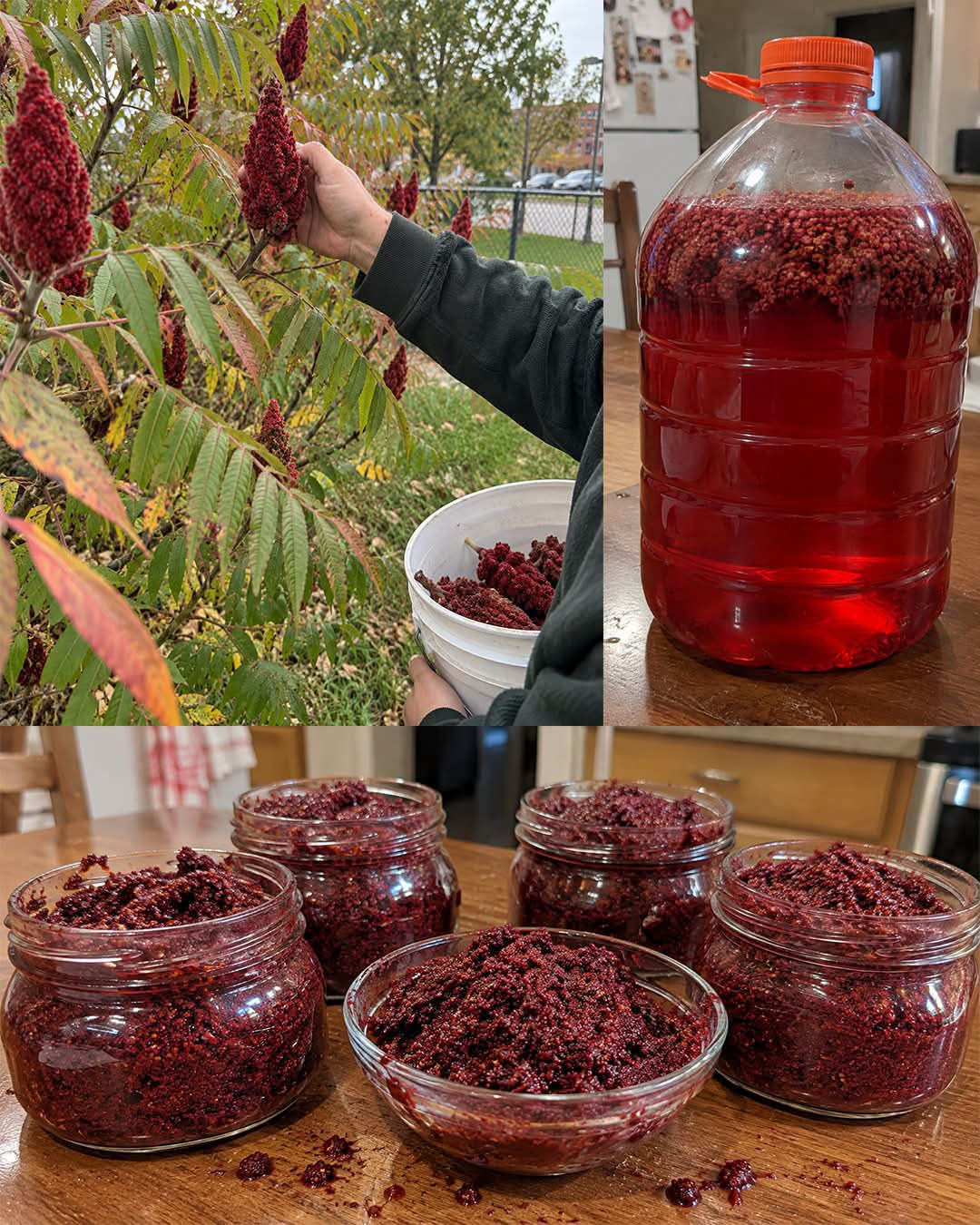
Method 1: Making Sumac-Ade (Cold Water Infusion) This method creates a vibrant red, deeply flavorful beverage.

- Do Not Use Hot Water: This is the most important rule of making sumac drinks. Hot water will pull out the bitter tannins from the stems and seeds. This will make the drink taste like bitter wood. Always use cold or room-temperature water.
- The Process: Take the whole red cones (or break them apart slightly with your hands) and place them into a large container or a large plastic jug. Fill the container completely with cold water.
- Steeping: Let the berries soak in the cold water for anywhere from 4 to 12 hours. You can leave the container on the kitchen counter or put it in the refrigerator. Over time, you will see the water turn a bright, beautiful red color.
- Straining: Sumac berries are covered in tiny hairs. These hairs can irritate your throat if swallowed. You must strain the red liquid thoroughly. Pour the liquid through a standard coffee filter, a thick paper towel, or multiple folded layers of fine cheesecloth.
- Serving: The strained liquid will be very tart. Sweeten the red liquid with standard white sugar, honey, or maple syrup to balance the extreme tartness. Serve it cold over ice.
Method 2: Making Sumac Spice Paste or Powder The berries can also be processed into a dark red, coarse spice or moist paste that is stored in glass jars for cooking.

- Drying: First, lay the foraged cones out on a flat baking sheet. Leave them in a dry, well-ventilated area for a few days to let the berries dry slightly.
- Separating: Using your hands, break the individual little berries off the central thick stem. You only want the tiny berries, not the thick wooden twigs.
- Grinding: The flavor is entirely in the fuzzy red coating. The inner seed is incredibly hard and completely lacks flavor. Place the small berries in a standard food processor or a kitchen blender. Pulse the machine gently a few times. You do not want to completely crush or obliterate the hard inner seeds. You just want to knock the red coating off the outside of the seeds.
- Sifting: Pour the blended mixture through a fine mesh kitchen sieve. Use your hands or the back of a spoon to rub the mixture aggressively against the metal mesh. The dark red, tangy powder will fall through the holes, and the hard, bare seeds will stay trapped in the sieve. Throw the hard seeds away.
- Storage: Pack the resulting deep red spice into clean glass jars. Depending on the ambient moisture content of your specific harvest, it may look like a dry powder or it might clump together like a coarse, slightly wet paste. Store the sealed jars in the refrigerator to keep the spice fresh for many months.
The Most Common Ways to Use Sumac Spice at Home
Once you have processed your sumac into a powder or paste, you can use it just like any standard kitchen spice. Sumac is a foundational staple in Middle Eastern cuisine, and your homemade Staghorn Sumac can be used in all the exact same culinary ways.
- As a Lemon Substitute: Anytime a recipe calls for a squeeze of fresh lemon juice or grated lemon zest, you can simply use a large pinch of sumac instead. It provides the exact same bright acidity without adding any extra liquid to the dish, which is perfect for dry recipes.
- Meat Rubs: Sumac pairs perfectly with roasted or grilled meats. Rub the red powder heavily onto chicken, fish, or lamb before cooking. The natural acidity helps tenderize the meat while it bakes or grills, and it forms a delicious crust.
- Garnishing Dips: Sprinkle the bright red powder over the top of a bowl of hummus, baba ganoush, or a plate of deviled eggs. It adds a massive pop of beautiful color and a sharp, tangy flavor that cuts through rich, fatty foods.
- Salad Dressings: Whisk the sumac powder directly into olive oil, minced garlic, and a little salt. This creates a fast, bright, acidic dressing that is perfect for simple cucumber, onion, and tomato salads.
- Vegetable Seasoning: Toss roasted carrots, potatoes, or onions in a little olive oil and sumac right after they come out of the hot oven. The heat wakes up the flavor of the spice and brightens the earthy flavors of the root vegetables.
- Baking Breads: Add a spoonful of sumac powder to homemade bread dough or cracker dough before baking. It gives the baked goods a savory, slightly sourdough-like tang.
By taking the time to carefully identify, harvest, and process Staghorn Sumac, you can easily turn a common wild plant into a year-round supply of essential vitamins, antioxidants, and incredible flavor for your kitchen.