
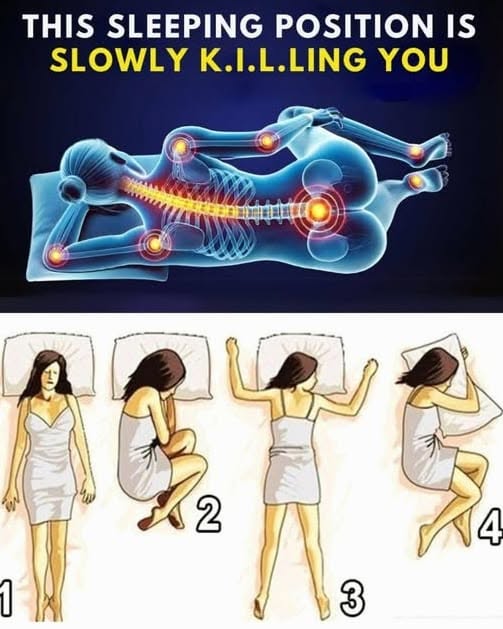
The main risk of a sleeping position is not the position name itself, but what it does to your breathing, spine, joints, and digestion over several hours. For many adults, the safest practical goal is a position that lets you breathe comfortably, keeps your neck and back close to neutral, and does not leave you with repeated morning pain. Stomach sleeping deserves the most caution because it usually turns the neck to one side and can arch the lower back. Back sleeping can be comfortable for the spine, but it may worsen snoring or obstructive sleep apnea in some people. Side sleeping often works well, especially with a pillow between the knees, but tight curling or an unsupported shoulder can still cause problems Johns Hopkins Medicine.
Why Position Matters More Than the Label
People often ask for the single best or worst sleeping position, but medical sources are more nuanced. Cleveland Clinic notes that there is no one sleep position that fits everyone, and Johns Hopkins Medicine makes a similar point: position matters more as a person has more individual health concerns, pain patterns, or breathing issues Cleveland Clinic. A position that feels restful for one person may leave another person with neck stiffness, shoulder pressure, reflux symptoms, or disrupted sleep. That is why the most useful question is not, “Is this position bad?” The better question is, “What is this position doing to my body overnight?”
A neutral sleeping posture keeps the head, shoulders, spine, hips, and knees from being pulled into a hard twist for hours. MedlinePlus explains that posture includes static posture, meaning how the body is held when still, including during sleep. It also explains that the spine has natural curves that should be supported rather than exaggerated MedlinePlus. In bed, that usually means a pillow that does not push the chin sharply toward the chest or let the head drop sideways, and enough support under or between the legs to keep the hips from rotating the lower back.
- Morning pattern: repeated pain on waking is a clue that your position, pillow, mattress, or nighttime movement may need adjustment.
- Breathing pattern: loud snoring, gasping, or pauses noticed by another person deserve attention, especially if daytime sleepiness follows.
- Digestive pattern: heartburn that appears after lying down may respond to timing meals differently, left-side sleeping, or raising the head of the bed.
- Joint pattern: shoulder, hip, or knee discomfort may improve when pressure is spread with a pillow rather than concentrated on one joint.

Stomach Sleeping Can Strain the Neck and Lower Back
Stomach sleeping, also called prone sleeping, is the position most often singled out for caution in adult posture guidance. Mayo Clinic says sleeping on the stomach can be hard on the back and suggests trying other positions if possible; if stomach sleeping is the only comfortable option, a pillow under the hips and lower stomach may reduce lower-back strain Mayo Clinic. The reason is mechanical: most stomach sleepers must turn the head to one side to breathe, which can hold the neck in rotation for a long time. At the same time, a pillow that is too tall can lift the head and deepen the arch in the lower back.
Back Sleeping Is Supportive for Some, but Not for Everyone
Back sleeping can be comfortable because it distributes body weight broadly and can make it easier to keep the spine symmetrical. Mayo Clinic recommends placing a pillow under the knees for back sleepers with back discomfort, because that position can help maintain the lower back’s natural curve and relax back muscles Mayo Clinic. Cleveland Clinic similarly notes that a supportive pillow under the neck and a pillow under the knees can make back sleeping more comfortable for some people with neck or back pain Cleveland Clinic.
The catch is breathing. MedlinePlus explains that obstructive sleep apnea happens when breathing pauses during sleep because the airway narrows or becomes blocked, and it notes that sleeping on the back can cause the airway to become blocked or narrowed in some adults MedlinePlus. That does not mean every back sleeper has a sleep disorder. It does mean that heavy snoring, witnessed pauses in breathing, waking up gasping, morning headaches, or daytime sleepiness should not be treated as ordinary sleep quirks. Those patterns are worth discussing with a health professional, especially when they happen repeatedly.

Side Sleeping Usually Needs Pillow Support
Side sleeping is common and often comfortable, but it is not automatically perfect. The upper leg can fall forward, pulling the pelvis and lower back into rotation. The shoulder pressed into the mattress can also take a lot of load, especially if the pillow is too low and the neck droops toward the bed. Mayo Clinic suggests that side sleepers draw the legs slightly toward the chest and place a pillow between the knees to help align the spine, pelvis, and hips Mayo Clinic. Cleveland Clinic also recommends a leg pillow for side sleepers because it can keep the hips and spine better aligned Cleveland Clinic.
The Tight Fetal Curl Can Create Its Own Problems
A loose side position is different from a tight fetal curl. When the knees are pulled sharply toward the chest and the chin is tucked down, the back, hips, and neck can spend the night in a compressed shape. Cleveland Clinic specifically cautions against the fetal position when discussing sleep posture for pain, advising side sleepers to stay more elongated and avoid tucking the chin Cleveland Clinic. A simple test is how you feel on waking: if you need several minutes to unfold your neck, shoulders, or hips before moving comfortably, your body may be asking for a less curled position.

Reflux Can Make Flat Sleeping Uncomfortable
Sleeping position can also matter when heartburn or reflux is part of the picture. MedlinePlus explains that reflux can happen after lying down too soon after eating, and it lists raising the head of the bed, not eating close to bedtime, and sleeping on the left side among approaches that may improve GERD symptoms MedlinePlus. Johns Hopkins Medicine also notes that right-side sleeping can make heartburn worse for some people and that left-side sleeping may feel better Johns Hopkins Medicine.
For occasional heartburn, the practical issue is gravity and timing. Lying flat right after a large meal can make symptoms more noticeable, while a raised head of bed may be more stable than stacking loose pillows. If chest discomfort appears with shortness of breath, or pain spreads to the jaw or arm, MedlinePlus advises getting medical help right away because those symptoms can be related to the heart rather than digestion MedlinePlus. That boundary matters because it is easy to assume any nighttime chest burning is just heartburn.
Pillows Can Help, but They Can Also Cause Trouble
A pillow should fill the space between your head and the mattress without forcing your neck into a sharp angle. On your side, that often means a pillow high enough to keep the nose, chin, and breastbone facing forward rather than slanting down. On your back, it means support under the neck without pushing the chin strongly toward the chest. Cleveland Clinic warns that a pillow that is too low or too high can add neck strain for back sleepers Cleveland Clinic. For side sleepers, a pillow between the knees can be just as important as the pillow under the head because the pelvis can twist the lower back when the top leg drops forward.
How to Tell Whether Your Position Is a Problem
A sleep position is worth changing when the evidence repeats. One stiff morning after a long day may not mean much. A pattern that shows up several mornings a week is more meaningful. Track where the discomfort appears, which side you slept on, whether you woke during the night, and whether a pillow change helped. MedlinePlus notes that adults generally need enough sleep quantity and quality, and that frequently interrupted sleep can keep people from getting enough of certain sleep stages MedlinePlus. If a position causes you to wake often, it may affect rest even if it does not cause obvious pain.
Small experiments are usually more useful than a dramatic overnight overhaul. Try one adjustment for several nights: a knee pillow for side sleeping, a pillow under the knees for back sleeping, a lower head pillow for stomach sleeping, or a raised head of bed for reflux symptoms. Change only one thing at a time so you can tell what actually helped. If pain is severe, follows an injury, travels down an arm or leg, includes numbness or weakness, or keeps returning despite careful changes, it is time to talk with a qualified health professional rather than continuing to troubleshoot alone.
Important
This article provides general information for adults and is not medical advice. Sleep position choices can depend on personal symptoms, medical history, and individual anatomy, so personal decisions belong with a doctor or another qualified health professional. Seek prompt medical help for serious or sudden symptoms such as chest pain with shortness of breath, fainting, severe breathing trouble, new weakness, or pain after an injury.
A Practical Safer-Sleep Checklist
Before deciding that you must sleep in a completely new way, check the basics. Your body should feel supported, not forced. Your neck should not be sharply bent. Your lower back should not be arched or twisted. Your shoulders and hips should not be carrying pressure that wakes you. Your breathing should feel easy. If you snore heavily, gasp, or wake unrefreshed despite enough time in bed, position may be only one piece of a larger sleep issue. The goal is not to perform a perfect pose all night. It is to create a setup that lets your body rest with fewer avoidable stresses.
Article Summary
For most adults, sleeping position risk is about fit, context, and symptoms. Stomach sleeping is often the most stressful for the neck and lower back. Back sleeping can support the spine but may worsen snoring or obstructive sleep apnea patterns in some people. Side sleeping can be comfortable and useful, especially when the knees and neck are supported, but a tight curl or unsupported shoulder can still lead to morning soreness. Reflux symptoms may be influenced by lying flat, meal timing, and side choice. If a position leaves you sore, interrupts sleep, or comes with breathing symptoms, treat that pattern as useful information and ask a qualified professional for personal guidance when symptoms persist.
Common Questions
Is stomach sleeping always dangerous?
No. For some adults it is simply their most familiar position. The concern is that stomach sleeping often turns the neck to one side and can arch the lower back for hours. If you wake with neck, shoulder, or lower-back soreness, try shifting toward side sleeping or use a thin pillow and support under the hips.
Why can sleeping on my back make snoring worse?
In some adults, the airway can narrow more easily while lying on the back. MedlinePlus notes that obstructive sleep apnea involves narrowed or blocked airways during sleep, and back sleeping can contribute to airway narrowing in some people. Loud snoring, gasping, witnessed breathing pauses, or daytime sleepiness are reasons to speak with a health professional.
What is the easiest change for side sleepers with hip or back soreness?
A pillow between the knees is often the simplest first experiment. It helps keep the upper leg from pulling the pelvis forward, which can twist the lower back. Also check that your head pillow keeps your neck level rather than tilted toward or away from the mattress.
Can sleep position affect heartburn at night?
Yes, for some people. Reflux can feel worse after lying flat, especially soon after a meal. MedlinePlus lists not eating close to bedtime, raising the head of the bed, and left-side sleeping among measures that may improve GERD symptoms. Chest pain with shortness of breath or jaw or arm pain needs urgent medical help.
How long should I try a new sleeping position before judging it?
Give a small adjustment several nights if it is not causing pain or breathing trouble. It can take time to get used to a knee pillow, a different head pillow, or a less curled side position. If symptoms are severe, new, injury-related, or repeatedly disruptive, do not wait on a sleep experiment for personal medical guidance.
Article References
Trusted sources help support the cooking guidance, ingredient advice, and kitchen tips in this article.
- https://www.mayoclinic.org/diseases-conditions/back-pain/in-depth/sleeping-positions/art-20546852
- https://health.clevelandclinic.org/best-sleeping-position
- https://www.hopkinsmedicine.org/health/wellness-and-prevention/choosing-the-best-sleep-position
- https://www.medlineplus.gov/ency/article/000811.htm
- https://www.medlineplus.gov/gerd.html
- https://www.medlineplus.gov/guidetogoodposture.html
- https://health.clevelandclinic.org/best-sleeping-positions-for-pain
- https://www.medlineplus.gov/healthysleep.html