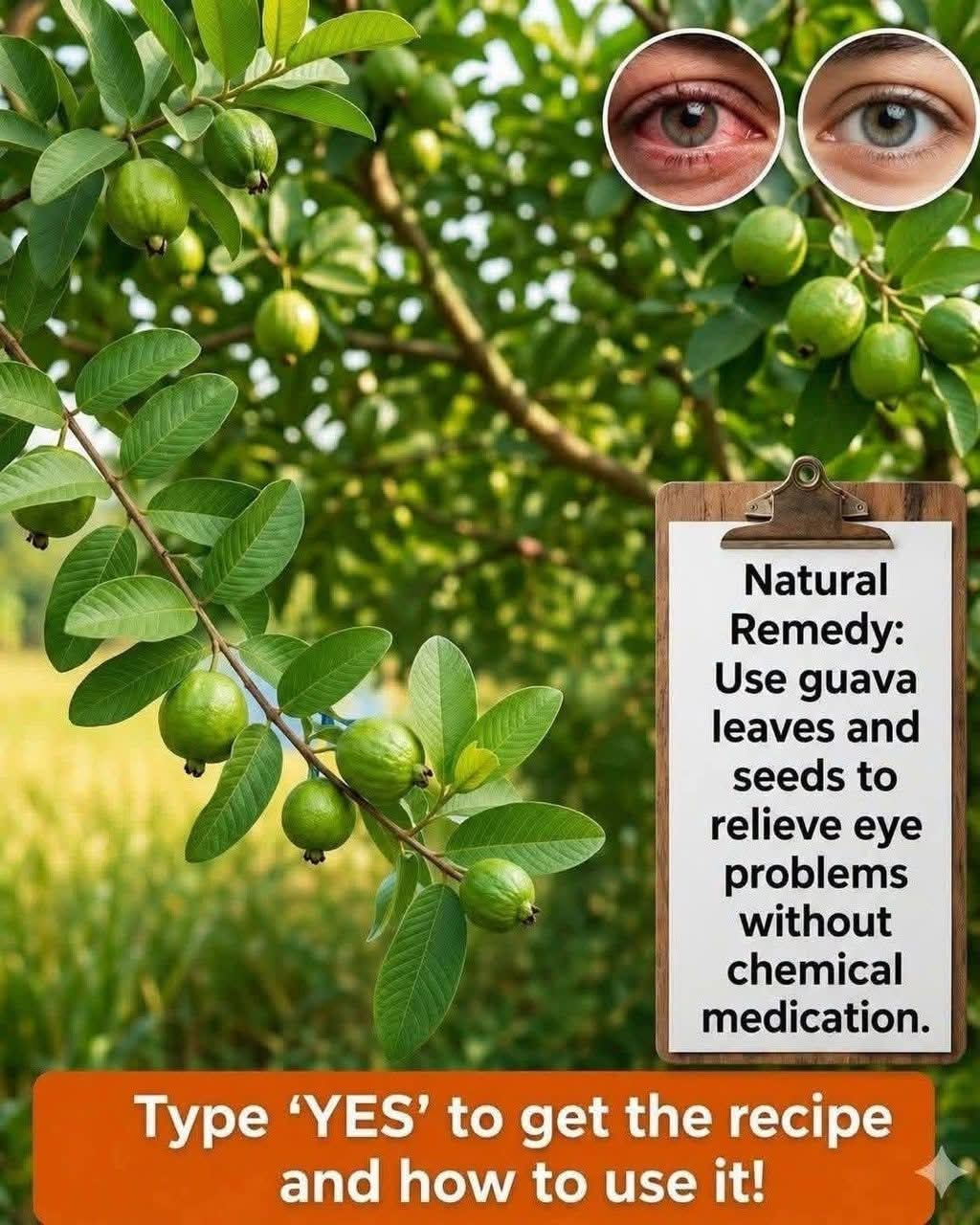
Guava leaves are widely used in traditional herbal practices, and they contain naturally occurring plant compounds with antioxidant properties. Because of this, many people are interested in whether guava leaves can help with eye comfort and general wellness. However, there is an important difference between traditional use and proven medical treatment: guava leaves have not been established as a cure for eye diseases, a way to restore lost eyesight, or a replacement for prescribed treatment.
When the eyes feel tired after a late night, prolonged reading, computer work, or many hours on a phone, simple habits can often make a meaningful difference. Giving the eyes regular periods of rest, blinking more frequently, reducing screen brightness, and avoiding prolonged uninterrupted screen use are sensible first steps.
A traditional guava leaf drink can be prepared quite simply. Wash two or three fresh guava leaves carefully under clean running water, then place them in about two cups of water. Bring the water to a gentle boil and allow the leaves to simmer for approximately 5 to 10 minutes. Remove from the heat, allow the liquid to cool, and strain it before drinking.
There is one very important safety rule: homemade guava leaf preparations should not be placed directly into the eyes. Do not use guava tea, crushed leaves, extracts, or homemade mixtures as eye drops. Such preparations are not sterile and could introduce microorganisms or irritating substances into the eye. Products intended for use inside the eye are manufactured under conditions designed to minimize contamination.
For tired or dry eyes, try taking frequent breaks during screen use. One useful approach is the 20-20-20 method: roughly every 20 minutes, look at something about 20 feet away for approximately 20 seconds. Remembering to blink regularly can also help reduce dryness while concentrating on a screen.
Your sleeping habits matter as well. Staying awake late can leave the eyes feeling dry, irritated, heavy, or difficult to focus. Getting adequate sleep and maintaining a consistent sleep schedule can give the eyes an opportunity to recover from everyday visual strain.
The environment around you can contribute to discomfort too. Direct airflow from a fan or air conditioner may make dry-eye symptoms worse. Taking breaks away from the airflow and using suitable lubricating eye drops when recommended by an eye-care professional or pharmacist may provide relief.
Good nutrition is another part of maintaining normal eye function. A varied diet containing vegetables, fruits, leafy greens, eggs, fish, nuts, seeds, and other nutrient-rich foods supplies many of the vitamins and minerals needed by the body. Staying adequately hydrated also supports general health.
It is important, however, not to mistake temporary eye fatigue for an eye disease. Persistent eye pain, ongoing redness, sensitivity to light, continuing blurred vision, flashes of light, new floaters, or sudden changes in eyesight should not be treated at home with herbal remedies. These symptoms can require examination by an eye-care professional.
People living with diabetes should be particularly attentive to changes in their vision because diabetes can affect the eyes and may require regular eye examinations. As people grow older, conditions such as cataracts, glaucoma, and age-related macular degeneration also become more important considerations. Herbal tea cannot be relied upon to treat these conditions.
Guava leaves can therefore be enjoyed as a traditional plant ingredient, but there is no established evidence that they can restore damaged eyesight or eliminate an eye disorder. If your eyes are frequently tired, the most useful approach is to combine sufficient sleep, regular breaks from screens, nutritious food, appropriate eye protection, and routine eye examinations when needed.
Most importantly, do not postpone professional eye care because a natural remedy is advertised as a replacement for medication. Protecting your eyesight starts with finding the actual cause of a problem and receiving the appropriate care.
A natural method using guava leaves to treat eye problems, help improve vision, and relieve eye pain and fatigue, especially with age or after staying up late