
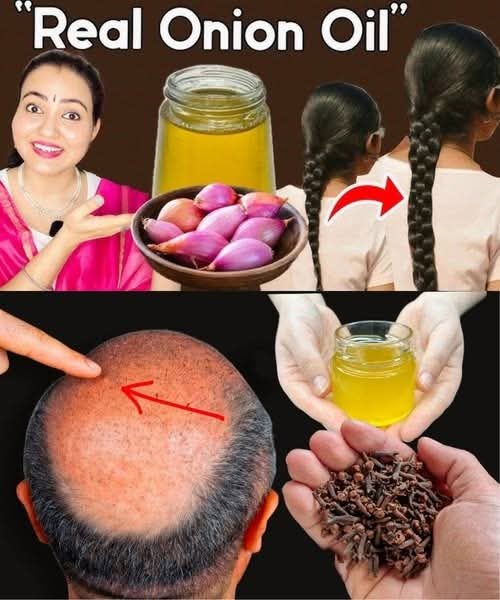
Homemade onion and clove hair oil has become popular among people looking for simple, affordable ways to care for thinning hair. Made with common kitchen ingredients, this DIY treatment combines onion, cloves, and a carrier oil to create a fragrant scalp oil that can be incorporated into a hair-care routine.
Social media posts sometimes claim that onion oil can fill bald spots or produce dramatic hair growth in just 16 days. However, there is no strong scientific evidence that homemade onion and clove oil can reverse baldness or regrow hair that quickly. Hair growth depends on several factors, including genetics, nutrition, hormones, scalp health, and the underlying cause of hair loss.
Still, if you enjoy experimenting with homemade beauty recipes, this simple preparation can be an interesting addition to your personal-care routine, provided you use it carefully.
Why Use Onion and Cloves for Hair Care?
Onions contain sulfur-containing compounds and antioxidants. These compounds have been studied for various biological properties, but their presence in onions does not prove that onion oil stimulates hair growth.
One small study examined onion juice for patchy hair loss caused by alopecia areata. The findings were limited and do not establish that homemade onion oil works for common baldness, hereditary hair loss, or general thinning.
Cloves contain eugenol, a naturally occurring aromatic compound. Although eugenol has been studied for certain biological properties, there is insufficient clinical evidence that applying cloves or clove-infused oil promotes hair regrowth.
A carrier oil, such as coconut or olive oil, can help lubricate the hair and reduce friction during grooming. This may improve the feel and appearance of dry hair, but it does not necessarily increase the number of growing hairs.
Homemade Onion and Clove Hair Oil Recipe
This recipe uses gentle heating to infuse a carrier oil with onion and whole cloves. Because fresh onion contains water, the finished oil should be handled carefully to reduce spoilage risks.
Ingredients
- 1 small red onion or shallot
- 1 cup (240 ml) coconut oil or olive oil
- 6–8 whole cloves
- 1 small, completely dry saucepan
- A fine-mesh strainer
- A clean, completely dry glass container
Important: Fresh onion introduces moisture into oil, which can encourage microbial growth. Homemade fresh-onion oil is not shelf-stable, and straining does not make it safe for long-term storage. For a lower-moisture alternative, use a commercially prepared hair oil from a reputable manufacturer.
Preparation Time
- Preparation: 10 minutes
- Heating: 15–20 minutes
- Cooling: 20–30 minutes
- Total time: Approximately 45–60 minutes
- Yield: About ¾–1 cup, depending on evaporation and straining
How to Prepare the Oil
Step 1: Prepare the Onion
Peel the onion and chop it into small pieces. Keep your cutting board and utensils clean, and avoid introducing unnecessary water into the oil mixture.
Step 2: Warm the Carrier Oil
Pour the coconut or olive oil into a small saucepan. Warm it over the lowest heat setting.
Do not allow the oil to smoke or become excessively hot. Gentle heating helps release the onion’s aroma without scorching the ingredients.
Step 3: Add the Onion and Cloves
Add the chopped onion and whole cloves to the warm oil. Stir gently and maintain low heat for approximately 15–20 minutes.
Watch the mixture carefully. If the onion begins browning rapidly or the oil starts smoking, remove the pan from the heat.
Heating does not reliably eliminate all hazards associated with moisture-containing ingredients in oil, so this preparation should not be treated as a preserved cosmetic product.
Step 4: Cool and Strain
Remove the saucepan from the heat and allow the mixture to cool. Strain it using a clean, fine-mesh strainer.
Do not assume that removing the onion pieces makes the oil safe for extended storage. For the safest option, use a commercially formulated hair oil or prepare a fresh, water-based onion treatment immediately before use.
Step 5: Perform a Patch Test
Before applying any new hair product, test a small amount on a limited area of skin and monitor for irritation. A patch test cannot guarantee that an allergic reaction will not occur.
Avoid applying the mixture to broken, inflamed, or irritated skin. Cloves can be irritating, particularly in concentrated preparations.
How to Use Hair Oil Carefully
If you choose a properly formulated, scalp-safe hair oil, apply a small amount according to the product’s directions. Gently massage it into the scalp without scratching or rubbing aggressively.
Leave it on only for the recommended period, then wash it out if needed. Stop immediately if you experience burning, redness, itching, swelling, or a rash.
Avoid getting oil in your eyes. Do not apply homemade onion oil to a sensitive scalp or an area affected by unexplained hair loss.
For a simple conditioning routine, you can instead apply a small amount of plain coconut or olive oil to the lengths and ends of dry hair. This can help reduce friction and improve softness without making claims about hair regrowth.
Storage and Safety Tips
Fresh onion mixed with oil is not a shelf-stable preparation. Do not store it at room temperature or keep it for weeks in a jar. Refrigeration alone does not guarantee safety, and appearance or smell cannot reliably reveal every hazard.
The best option is to avoid storing fresh-onion oil altogether. Use a commercially manufactured product designed for scalp application, and follow its storage instructions and expiration date.
Never add water, damp herbs, or other fresh ingredients to a bottle of oil intended for long-term use.
Can Onion and Clove Oil Regrow Hair in 16 Days?
There is no reliable evidence that this homemade oil can regrow hair on a bald spot in 16 days. Hair grows gradually, and noticeable changes usually take longer than a few days or weeks. Results also depend on the reason for hair loss.
If your hair is thinning, your scalp is developing bald patches, or you are losing hair suddenly, consider consulting a dermatologist. Treatments such as minoxidil may help certain types of hair loss, while other conditions require different approaches.
A balanced diet, gentle hair care, and avoiding tight hairstyles or excessive heat can also support healthy hair. However, nutritional supplements are unlikely to help unless you have a relevant deficiency.
Final Thoughts
Homemade onion and clove hair oil is an interesting DIY beauty idea, but viral claims about reversing baldness in 16 days are not supported by strong scientific evidence. Onion and cloves contain naturally occurring compounds, yet that does not establish them as effective hair-regrowth treatments.
For safer hair care, choose products formulated for scalp use, avoid storing fresh ingredients in oil, and pay attention to signs of irritation. If you notice persistent thinning or bald patches, identifying the underlying cause is a much more reliable first step toward finding an effective treatment.CategoriesHealth Tips
3 Natural Ways to Support Healthy Vision: Foods and Daily Habits for Better Eye Health