
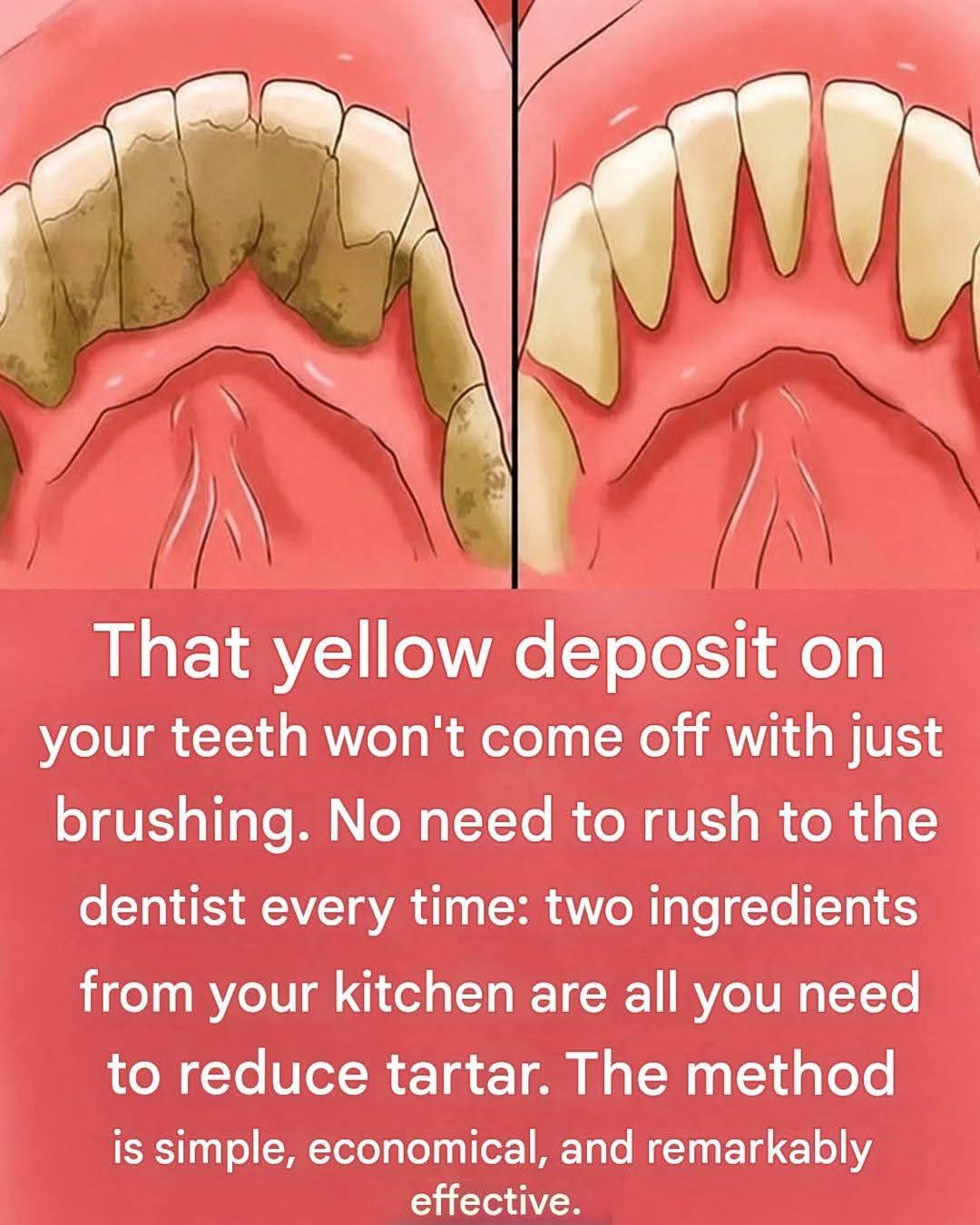
That yellow or brown buildup along your teeth can be frustrating. You may brush twice a day, use toothpaste, and still notice a hard deposit around the gumline. Many people assume they simply need to brush harder or try a homemade remedy, but there is an important difference between plaque and tartar that is often overlooked.
Plaque is a soft, sticky film containing bacteria that develops naturally on teeth. When it is not removed effectively, minerals in saliva can cause it to harden into tartar, also called dental calculus. Once tartar has hardened, an ordinary toothbrush generally cannot remove it completely.
This is why brushing more aggressively is not the answer. Excessive pressure can irritate the gums and contribute to enamel wear or gum recession without actually removing hardened calculus.
The good news is that you can do a lot at home to prevent additional buildup and improve your oral hygiene.
Start with consistent brushing. Use a soft-bristled toothbrush and fluoride toothpaste, brushing gently for about two minutes twice a day. Pay particular attention to the gumline, where plaque commonly accumulates. Small, controlled movements are more useful than aggressive scrubbing.
Cleaning between your teeth is equally important. Dental floss, interdental brushes, or another appropriate interdental cleaner can remove plaque from areas a toothbrush cannot reach. This can be especially helpful for people who frequently notice buildup between their teeth.
An antibacterial mouthwash may also be useful as part of an overall oral-care routine, although it should not be considered a substitute for brushing and cleaning between the teeth.
You may also see online recommendations involving baking soda, vinegar, lemon juice, hydrogen peroxide, salt, or other kitchen ingredients. Some of these substances may temporarily change the appearance of surface stains, but that does not mean they safely dissolve established tartar. Acidic ingredients such as lemon juice or vinegar can damage tooth enamel when used improperly, while overly abrasive mixtures can contribute to surface wear.
if you can feel a hard, rough ridge attached firmly to your tooth, especially near the gums, it may already be calculus rather than ordinary plaque. Trying to scrape it away with a nail, metal instrument, razor, or household tool is not a safe solution. You can injure your gums, scratch tooth surfaces, or introduce bacteria into damaged tissue.
Professional dental cleaning remains the safest way to remove established tartar. A dental professional can use specialized instruments to remove calculus while also checking for signs of gingivitis, gum disease, cavities, enamel damage, or other problems that may not be obvious at home.
There are also simple habits that can make a significant difference over time. Limiting frequent sugary snacks and drinks, drinking water regularly, avoiding tobacco, and maintaining regular dental checkups can all support healthier teeth and gums.
If your gums bleed frequently, appear swollen or red, feel tender, or have started pulling away from your teeth, don’t simply assume that the problem is cosmetic tartar. These can be signs of gum inflammation or periodontal disease and deserve professional evaluation.
So, can you remove tartar completely at home? Usually, no. You can remove the soft plaque that eventually contributes to tartar, but hardened calculus generally requires professional cleaning.
The most effective approach isn’t an aggressive homemade tartar-removal trick. It is a simple daily routine: fluoride toothpaste, gentle brushing, cleaning between the teeth, a balanced diet, and regular professional dental care.
Your teeth don’t need to be scrubbed harder—they need to be cleaned consistently and safely.